

You Might Be Depressed Without Realizing It: 12 Signs to Watch For


Depression is often misunderstood as constant sadness, crying, or emotional breakdowns. In reality, many people live with depression for months—or even years—without realizing it. They continue working, studying, caring for their families, and fulfilling responsibilities while silently struggling with symptoms they don't recognize as signs of a mental health condition.
Hidden depression can affect your energy, concentration, sleep, relationships, physical health, and overall quality of life. Because these symptoms may appear unrelated to mood, many individuals attribute them to stress, aging, work pressure, or physical illness.
According to the World Health Organization (WHO), depression is one of the leading causes of disability worldwide, affecting hundreds of millions of people. Early recognition is critical because untreated depression can worsen over time and increase the risk of serious emotional and physical health complications.
In this article, you'll learn the 12 hidden signs of depression, why they occur, who is at risk, when to seek professional help, and evidence-based treatment options that can help people recover and regain emotional well-being.
Must read: "Mental Health In Pakistan: Why Millions Are Suffering In Silence"
Need Professional Mental Health Support?
If persistent mood changes, sleep disturbances, or unexplained emotional struggles are affecting your daily life, consider speaking with a qualified mental health professional through Apka Muaalij or call 042-32377001 for guidance and support.
Key Takeaways
-
Depression often presents with subtle symptoms beyond sadness.
-
Chronic fatigue, irritability, and sleep problems can be warning signs.
-
Emotional numbness and social withdrawal are common hidden symptoms.
-
Persistent symptoms lasting more than two weeks deserve professional evaluation.
-
Evidence-based treatments include psychotherapy, medication, and lifestyle changes.
-
Early intervention improves outcomes and quality of life.
-
Mental health support is available, and recovery is possible.
What Is Depression?

Depression, also known as Major Depressive Disorder (MDD), is a medical condition that affects how a person thinks, feels, and functions. It is not simply a bad mood or temporary emotional reaction to life's challenges.
Common symptoms include:
-
Persistent low mood
-
Loss of interest or pleasure
-
Fatigue
-
Sleep disturbances
-
Appetite changes
-
Feelings of worthlessness
-
Difficulty concentrating
However, many people experience less obvious symptoms that often go unnoticed.
12 Hidden Signs of Depression
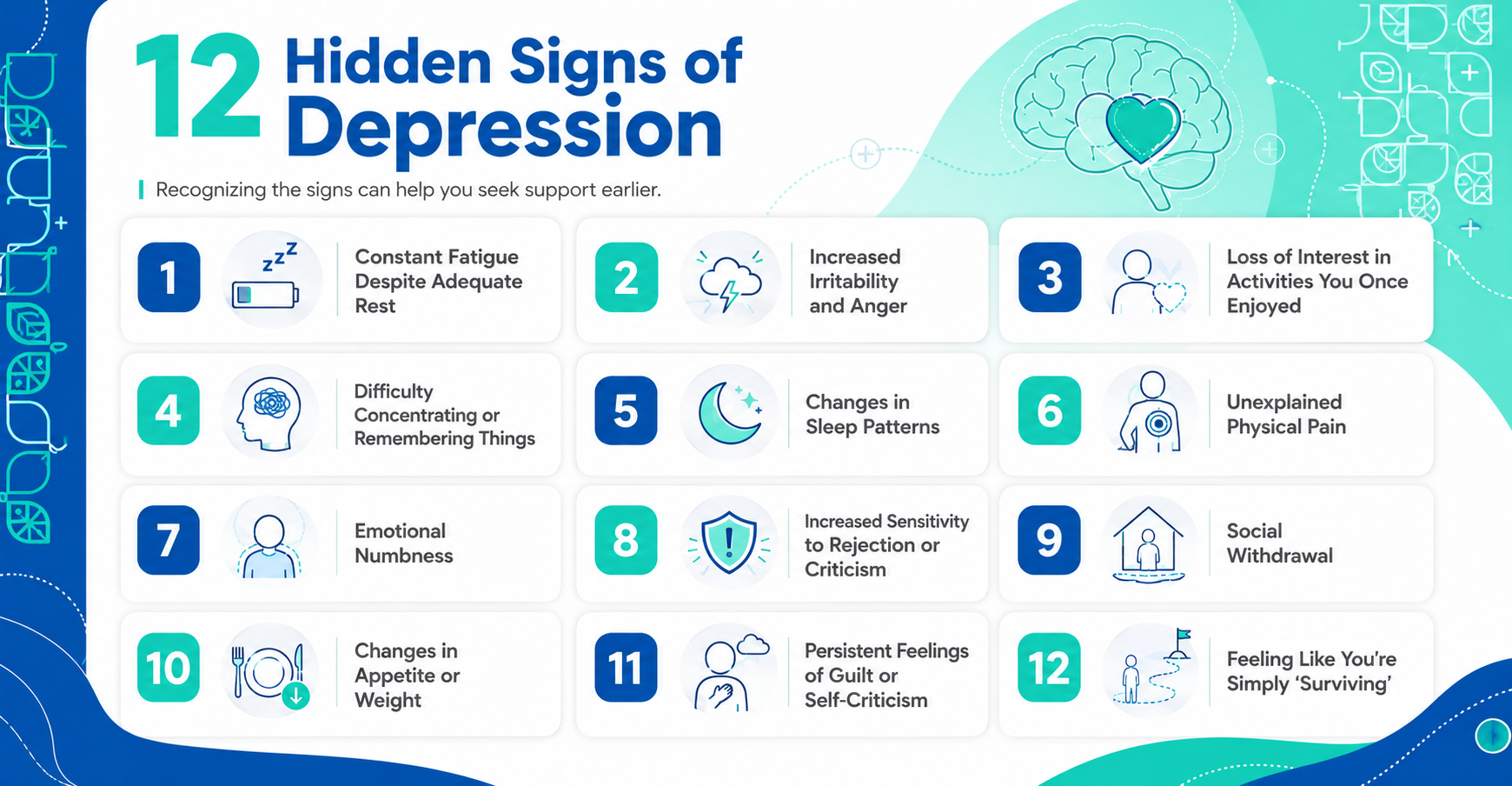
1. Constant Fatigue Despite Adequate Rest
One of the most overlooked symptoms of depression is ongoing exhaustion.
People often report:
-
Waking up tired
-
Low energy throughout the day
-
Feeling mentally drained
-
Needing excessive naps
Research published in the Journal of Clinical Psychiatry shows that fatigue is one of the most common physical symptoms associated with depression.
2. Increased Irritability and Anger
Depression doesn't always cause sadness.
Some individuals experience:
-
Short temper
-
Frustration over minor issues
-
Increased arguments
-
Unexpected anger outbursts
This symptom is particularly common among men and adolescents.
3. Loss of Interest in Activities You Once Enjoyed
A condition called anhedonia—the inability to experience pleasure—is a hallmark symptom of depression.
Examples include:
-
Losing interest in hobbies
-
Avoiding social gatherings
-
No longer enjoying favorite foods
-
Reduced enthusiasm for work
More read: "Which Mental Health Specialist Is Right for You? Complete 2026 Guide"
4. Difficulty Concentrating or Remembering Things
Depression affects brain function.
You may notice:
-
Forgetfulness
-
Difficulty making decisions
-
Reduced productivity
-
Trouble following conversations
Studies from Harvard Medical School indicate that depression can significantly impact cognitive performance and executive functioning.
5. Changes in Sleep Patterns
Sleep disturbances are strongly associated with depression.
These may include:
-
Early morning awakening
-
Oversleeping
-
Frequent nighttime waking
Both too little and too much sleep can be warning signs.
6. Unexplained Physical Pain
Depression can manifest physically.
Common complaints include:
-
Muscle aches
-
Digestive discomfort
Research from the Mayo Clinic and National Institutes of Health (NIH) shows a strong connection between depression and chronic pain syndromes.
7. Emotional Numbness
Some people with depression don't feel sad.
Instead, they feel:
-
Empty
-
Detached
-
Emotionally flat
-
Disconnected from loved ones
Emotional numbness often delays diagnosis because individuals don't recognize it as a mental health symptom.
8. Increased Sensitivity to Rejection or Criticism
Depression can alter emotional processing.
Affected individuals may:
-
Take comments personally
-
Feel hurt easily
-
Assume others dislike them
-
Constantly seek reassurance
These reactions can affect relationships and self-esteem.
Must read: "Mental Health Treatment In Pakistan: Symptoms, Causes, Recovery & More"
9. Social Withdrawal
A gradual withdrawal from social interaction is a common hidden sign.
You might notice:
-
Canceling plans
-
Avoiding phone calls
-
Spending more time alone
-
Reduced communication with family
Social isolation can worsen depressive symptoms over time.
10. Changes in Appetite or Weight
Depression affects eating behaviors differently in different people.
Some experience:
-
Loss of appetite
-
Unintentional weight loss
Others develop:
-
Emotional eating
-
Food cravings
-
Weight gain
11. Persistent Feelings of Guilt or Self-Criticism
Depression often distorts self-perception.
Common thoughts include:
-
"I'm not good enough."
-
"Everything is my fault."
-
"I always fail."
Excessive guilt is a recognized symptom in diagnostic guidelines used worldwide.
12. Feeling Like You're Simply "Surviving."
Many people describe hidden depression as functioning on autopilot.
Signs include:
-
Going through the motions
-
Lack of motivation
-
Emotional exhaustion
-
Feeling disconnected from life
This symptom is particularly common among high-functioning adults.
Must read: "Early Signs Of Schizophrenia: Symptoms You Should Never Ignore"
Hidden Depression vs Normal Stress
|
Feature |
Normal Stress |
Depression |
|
Duration |
Temporary |
Weeks to months |
|
Mood Changes |
Situation-related |
Persistent |
|
Energy Levels |
Usually recoverable |
Constant fatigue |
|
Interest in Activities |
Generally maintained |
Often lost |
|
Sleep Problems |
Temporary |
Persistent |
|
Daily Functioning |
Usually preserved |
Frequently impaired |
|
Self-Esteem |
Mostly intact |
Often reduced |
Who Is Most at Risk?
Several factors increase the likelihood of depression:
Biological Factors
-
Family history of depression
-
Hormonal changes
-
Chronic illnesses
-
Neurological conditions
Psychological Factors
-
Trauma history
-
Low self-esteem
-
Perfectionism
Lifestyle Factors
-
Sleep deprivation
-
Lack of exercise
-
Substance misuse
-
Social isolation
Pakistan-Specific Considerations
In Pakistan, mental health challenges may be intensified by:
-
Academic pressure
-
Financial stress
-
Social stigma
-
Limited access to mental health services
-
Family and caregiving responsibilities
More read: "15 Common Reasons For Headaches: Types, Warning Signs & When To See A Doctor"
When Should You Seek Professional Help?
Seek evaluation if symptoms:
-
Last longer than two weeks
-
Affect work or studies
-
Interfere with relationships
-
Causes significant distress
-
Continue worsening
A professional assessment can determine whether symptoms are related to depression, anxiety, burnout, medical conditions, or a combination of factors.
Persistent fatigue, irritability, sleep problems, or emotional numbness should not be ignored. Qualified mental health specialists at Apka Muaalij can help assess your symptoms and develop an appropriate treatment plan. For assistance, call 042-32377001.
How Is Depression Diagnosed?
Healthcare professionals typically use:
Clinical Evaluation
Assessment includes:
-
Symptom history
-
Medical history
-
Family history
-
Lifestyle factors
Screening Tools
Commonly used questionnaires include:
-
PHQ-9
-
Beck Depression Inventory
-
Hamilton Depression Rating Scale
Medical Evaluation
Doctors may investigate conditions that mimic depression, such as:
-
Vitamin deficiencies
-
Sleep disorders
-
Chronic inflammatory diseases
3 Evidence-Based Treatment Options
Psychotherapy
Research consistently supports:
-
Interpersonal Therapy (IPT)
-
Behavioral Activation
These approaches help individuals identify unhealthy thought patterns and develop healthier coping skills.
Medication
For moderate to severe depression, healthcare professionals may prescribe:
-
Selective Serotonin Reuptake Inhibitors (SSRIs)
-
Serotonin-Norepinephrine Reuptake Inhibitors (SNRIs)
-
Other evidence-based antidepressants
Medication should always be used under professional supervision.
Lifestyle Interventions
Evidence supports:
-
Regular physical activity
-
Healthy nutrition
-
Sleep optimization
-
Social engagement
-
Stress management
Can Depression Be Prevented?
Not all cases can be prevented, but risk may be reduced through:
-
Consistent sleep schedules
-
Regular exercise
-
Strong social connections
-
Managing chronic stress
-
Seeking help early
-
Limiting alcohol and substance use
Also read: "How Family Pressure In Pakistan Affects Mental Health & How To Fix It"
Common Misconceptions About Depression
"Depressed people are always sad."
Fact: Many experience irritability, numbness, or fatigue instead.
"Strong people don't get depressed."
Fact: Depression affects people of all backgrounds, professions, and personality types.
"Depression is just a lack of willpower."
Fact: Depression is a medically recognized mental health disorder involving biological, psychological, and social factors.
"You can simply 'snap out of it."
Fact: Effective treatment often requires professional support and evidence-based interventions.
Professional Mental Health Support in Pakistan
Recognizing the hidden signs of depression is an important first step, but understanding what those symptoms mean often requires professional evaluation. If persistent fatigue, emotional numbness, irritability, sleep disturbances, loss of motivation, or other symptoms discussed in this article are affecting your daily life, consider speaking with a qualified mental health professional.
Through Apka Muaalij, patients can access confidential support from experienced psychiatrists, psychologists, and mental health specialists who can assess symptoms, provide diagnostic guidance, and develop personalized treatment plans.
Support options include:
-
In-person appointments (where available)
-
Psychiatric assessments and follow-up care
-
Evidence-based treatment recommendations
📞 For appointments or assistance, call 042-32377001.
Frequently Asked Questions (FAQs)
1. Can someone have depression without feeling sad?
Yes. Many individuals experience fatigue, irritability, numbness, concentration problems, or loss of motivation rather than obvious sadness.
2. What are the earliest signs of depression?
Early signs often include changes in sleep, energy levels, concentration, mood, appetite, and interest in daily activities.
3. Is constant tiredness a sign of depression?
It can be. Persistent fatigue is one of the most common physical symptoms associated with depression.
4. How long do symptoms need to last before it's considered depression?
Most diagnostic guidelines require symptoms to persist for at least two weeks and significantly affect daily functioning.
5. Can depression cause physical pain?
Yes. Headaches, muscle aches, digestive issues, and chronic pain frequently occur alongside depression.
6. Is depression common in Pakistan?
Yes. Mental health conditions, including depression and anxiety, affect many individuals in Pakistan, though stigma often prevents people from seeking help.
7. Can exercise help depression?
Research shows that regular physical activity can improve mood, reduce stress, and support overall mental health.
8. What is high-functioning depression?
High-functioning depression refers to individuals who maintain responsibilities while experiencing persistent depressive symptoms.
9. When should I see a doctor for depression symptoms?
You should seek professional evaluation if symptoms persist longer than two weeks or interfere with daily life.
10. Is depression treatable?
Yes. Most people improve significantly with appropriate treatment, which may include therapy, medication, lifestyle modifications, or a combination of approaches.
Disclaimer: This article is intended for educational and informational purposes only. It is not a substitute for professional medical advice, diagnosis, or treatment. Always consult a qualified healthcare professional regarding any medical or mental health concerns. Never ignore professional medical advice or delay seeking treatment because of information you have read in this article.

Find & Book the best "Physiatrist" near you
Book Appointment