

Which Mental Health Specialist Is Right for You? Complete 2026 Guide


Mental health affects how we think, feel, behave, cope with stress, build relationships, and make everyday decisions. Yet many people struggle to understand where to seek help when symptoms such as anxiety, depression, memory problems, mood changes, panic attacks, or unexplained behavioral changes appear.
A common source of confusion is the difference between psychology, psychiatry, and neurology. While these specialties often work together, each has a unique role in diagnosing and treating conditions that affect the mind, brain, emotions, and behavior.
According to the World Health Organization (WHO), mental health conditions affect hundreds of millions of people worldwide, making access to accurate information and evidence-based treatment more important than ever.
This comprehensive guide explains how mental health treatment works, the roles of psychologists, psychiatrists, and neurologists, common mental health disorders, available treatment options, and when professional help is necessary.
Need Professional Mental Health Support?
If you or a loved one is experiencing persistent emotional distress, anxiety, depression, memory concerns, or behavioral changes, consult a qualified mental health specialists through Apka Muaalij or call 042-32377001 for guidance and specialist referrals.
Key Takeaways
-
Mental health treatment includes therapy, medication, lifestyle changes, and specialist care.
-
Psychologists focus on therapy and behavioral interventions.
-
Psychiatrists diagnose mental illnesses and prescribe medications.
-
Neurologists treat brain and nervous system disorders that may affect behavior and cognition.
-
Early intervention often improves outcomes and quality of life.
-
Evidence-based treatments are available for most common mental health conditions.
-
Severe symptoms such as suicidal thoughts or psychosis require urgent medical attention.
Must read: "Mental Health Treatment In Pakistan: Symptoms, Causes, Recovery & More"
What Is Mental Health Treatment?
Mental health treatment refers to professional interventions designed to improve emotional, psychological, behavioral, and cognitive well-being.
Treatment may include:
-
Psychological therapy
-
Psychiatric medications
-
Lifestyle modifications
-
Behavioral interventions
-
Brain and neurological assessments
-
Rehabilitation programs
-
Social and family support
The goal is not simply symptom reduction but improved quality of life, functioning, relationships, and long-term well-being.
Difference Between Psychology, Psychiatry, and Neurology

One of the most searched mental health questions worldwide is:
"Who should I see—a psychologist, psychiatrist, or neurologist?"
The answer depends on the nature of your symptoms.
|
Specialty |
Education & Training |
Main Focus |
Can Prescribe Medication? |
|
Psychologist |
Advanced training in psychology |
Therapy, counseling, behavioral interventions, psychological testing |
Usually No |
|
Psychiatrist |
Medical doctor specializing in mental health |
Diagnosis and treatment of mental disorders |
Yes |
|
Neurologist |
Medical doctor specializing in nervous system disorders |
Brain, spinal cord, and nerve conditions |
Yes |
What Does a Psychologist Do?
Psychologists specialize in understanding thoughts, emotions, behavior, personality, and coping mechanisms.
They commonly help with:
-
Anxiety disorders
-
Depression
-
Stress management
-
Relationship difficulties
-
Trauma and PTSD
-
Obsessive-compulsive disorder (OCD)
-
Eating disorders
-
Behavioral challenges
-
Academic and workplace stress
Must read: "Early Signs Of Schizophrenia: Symptoms You Should Never Ignore"
Common Psychological Therapies
Cognitive Behavioral Therapy (CBT)
CBT helps identify and change unhelpful thinking patterns and behaviors.
Research consistently supports CBT for:
-
Depression
-
Anxiety disorders
-
Panic disorder
-
OCD
-
PTSD
Acceptance and Commitment Therapy (ACT)
ACT focuses on psychological flexibility and values-based living.
Dialectical Behavior Therapy (DBT)
Frequently used for:
-
Emotional regulation difficulties
-
Self-harm behaviors
-
Borderline personality disorder
What Does a Psychiatrist Do?
Psychiatrists are medical doctors trained to diagnose, treat, and manage mental illnesses.
Unlike psychologists, psychiatrists can prescribe medications and assess biological contributors to psychiatric symptoms.
Conditions Commonly Treated by Psychiatrists
-
Major depressive disorder
-
Bipolar disorder
-
Schizophrenia
-
Severe anxiety disorders
-
ADHD
-
Substance use disorders
-
Eating disorders
-
Psychotic disorders
Common Psychiatric Treatments
Antidepressants
Used for:
-
Depression
-
Anxiety disorders
-
PTSD
Examples include:
-
SSRIs
-
SNRIs
Mood Stabilizers
Used primarily for bipolar disorder.
Antipsychotic Medications
Used for:
-
Schizophrenia
-
Psychosis
-
Severe mood disorders
Psychiatrists often combine medication with psychotherapy for optimal outcomes.
More read: "15 Common Reasons For Headaches: Types, Warning Signs & When To See A Doctor"
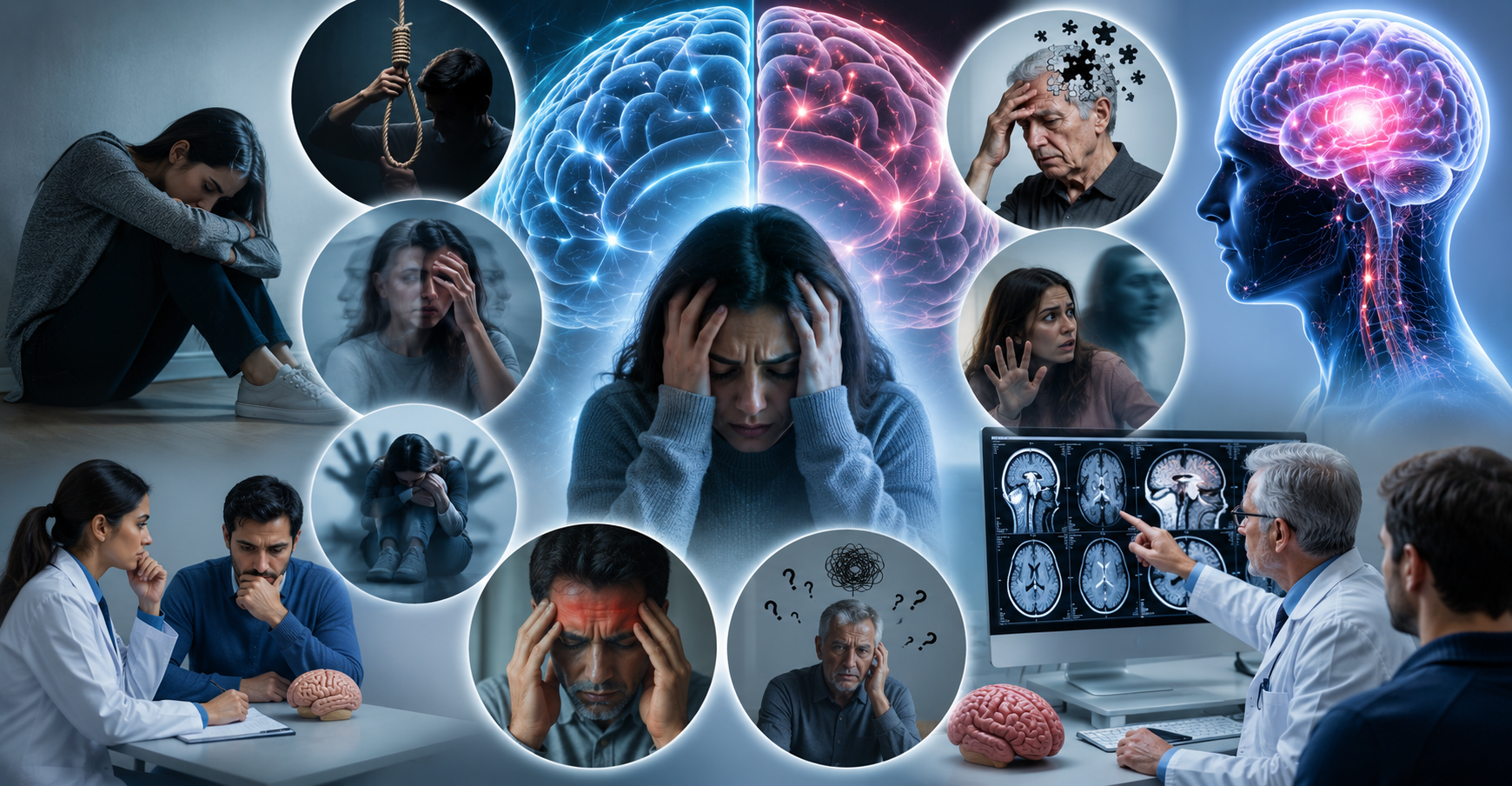
When Mental Health Symptoms Need Urgent Evaluation
Seek immediate medical attention if someone experiences:
-
Suicidal thoughts
-
Self-harm behaviors
-
Hallucinations
-
Delusions
-
Severe confusion
-
Extreme mood changes
-
Sudden personality changes
These symptoms require urgent psychiatric assessment.
What Does a Neurologist Do?
Neurologists diagnose and treat disorders affecting the brain, spinal cord, and nervous system.
Some neurological conditions can mimic psychiatric illnesses.
Conditions Managed by Neurologists
-
Migraine disorders
-
Sleep disorders
Mental Health Symptoms That May Be Neurological
A neurological evaluation may be needed when symptoms include:
-
Memory loss
-
Sudden personality changes
-
Unexplained confusion
-
Seizures
-
Speech difficulties
-
Cognitive decline
-
Tremors
Common Mental Health Disorders and Their Treatments
|
Disorder |
Common Symptoms |
Typical Treatment |
|
Sadness, loss of interest, fatigue |
Therapy, medication, lifestyle changes |
|
|
Excessive worry, panic, fear |
CBT, medication, stress management |
|
|
Repetitive thoughts and behaviors |
CBT, medication |
|
|
Flashbacks, hypervigilance |
Trauma-focused therapy |
|
|
Mood swings, mania, depression |
Mood stabilizers, therapy |
|
|
Delusions, hallucinations |
Antipsychotic medications |
|
|
Inattention, impulsivity |
Behavioral therapy, medication |
Concerned About Depression, Anxiety, or Emotional Stress?
Early intervention often improves outcomes. Qualified psychologists, psychiatrists, and neurologists can help determine the most appropriate treatment plan. To discuss symptoms with experienced healthcare professionals, contact Apka Muaalij at 042-32377001.
How Mental Health Conditions Are Diagnosed
A mental health diagnosis usually involves several components.
Medical HA mental history
Healthcare providers review:
-
Symptoms
-
Duration
-
Family history
-
Medical conditions
-
Medications
Psychological Assessment
May include:
-
Structured interviews
-
Standardized questionnaires
-
Behavioral evaluations
Physical Examination
Used to rule out medical causes.
Laboratory Testing
Sometimes recommended to exclude:
-
Thyroid disorders
-
Vitamin deficiencies
-
Hormonal imbalances
-
Neurological diseases
Brain Imaging
In selected cases, neurologists may order:
Also read: "How Family Pressure In Pakistan Affects Mental Health & How To Fix It"
Evidence-Based Mental Health Treatment Options
Psychotherapy
Often considered the first-line treatment for many mental health conditions.
Benefits include:
-
Improved coping skills
-
Better emotional regulation
-
Reduced symptoms
-
Stronger relationships
Medication
Helpful when symptoms significantly interfere with daily functioning.
Medication should always be prescribed and monitored by qualified healthcare professionals.
Lifestyle Interventions
Research supports:
-
Regular exercise
-
Healthy sleep habits
-
Balanced nutrition
-
Stress reduction techniques
-
Social connection
Family and Social Support
Supportive relationships improve recovery and treatment adherence.
Also, go through: " Psychiatrist Vs Psychologist: Who Should You Visit for Anxiety, Depression Or Stress?"
Mental Health Treatment in Pakistan
Mental health awareness in Pakistan has improved significantly, but challenges remain.
Common barriers include:
-
Social stigma
-
Limited specialist availability in some regions
-
Delayed treatment seeking
-
Lack of mental health education
Fortunately, telemedicine and online consultations are making professional care more accessible across Pakistan.
People experiencing symptoms should seek evidence-based treatment rather than relying solely on unverified advice or social media information.
Common Mental Health Myths
Myth 1: Mental illness is a sign of weakness
Reality: Mental illnesses are legitimate medical conditions influenced by biological, psychological, and social factors.
Myth 2: Therapy is only for severe problems
Reality: Therapy can help with stress, relationships, personal growth, and mild to moderate symptoms.
Myth 3: Medication changes your personality
Reality: Properly prescribed medications aim to reduce symptoms and improve functioning.
Myth 4: Mental health problems always resolve on their own
Reality: Many conditions worsen without appropriate treatment.
Prevention and Mental Wellness Strategies
Although not all mental illnesses can be prevented, certain habits support psychological well-being.
Read: "8 Hidden Symptoms Of ADHD In Adults Most People Miss"
Mental Health Protection Checklist
-
Exercise regularly
-
Maintain healthy sleep patterns
-
Limit substance use
-
Manage stress effectively
-
Build supportive relationships
-
Seek help early
-
Practice mindfulness
-
Maintain a balanced diet
-
Engage in meaningful activities
Looking for Specialist Mental Health Care?
Whether you need counseling, psychiatric evaluation, medication management, or neurological assessment, Apka Muaalij can help connect you with qualified professionals. Call 042-32377001 to explore available consultation options.
Conclusion
Mental health is an essential part of overall health, and effective treatment often requires understanding the distinct roles of psychology, psychiatry, and neurology. While psychologists help people develop coping skills and emotional resilience, psychiatrists manage complex mental illnesses and medications, and neurologists evaluate conditions affecting the brain and nervous system.
The most effective approach is often collaborative, combining therapy, medical evaluation, lifestyle modifications, and ongoing support. Seeking help early can significantly improve recovery, functioning, and long-term well-being.
If symptoms persist, worsen, or interfere with daily life, professional evaluation should not be delayed. Mental health conditions are treatable, and timely care can make a meaningful difference.
Frequently Asked Questions (FAQs)
1. What is the difference between a psychologist and a psychiatrist?
A psychologist primarily provides therapy, counseling, and psychological assessments. A psychiatrist is a medical doctor who diagnoses mental illnesses and can prescribe medications. Many patients benefit from care provided by both professionals.
2. When should I see a psychiatrist instead of a psychologist?
You should consider psychiatric evaluation if symptoms are severe, persistent, involve psychosis, suicidal thoughts, major mood disturbances, or may require medication management.
3. Can anxiety and depression be treated without medication?
Many individuals improve through psychotherapy, lifestyle changes, and stress-management strategies. However, moderate to severe cases may require medication alongside therapy.
4. Should I see a neurologist for mental health symptoms?
A neurologist may be appropriate if symptoms include memory loss, seizures, confusion, cognitive decline, tremors, or other neurological signs affecting behavior or mental functioning.
5. Is therapy effective for mental health disorders?
Yes. Evidence-based therapies such as Cognitive Behavioral Therapy (CBT) have demonstrated effectiveness for depression, anxiety, PTSD, OCD, and many other conditions.
6. How long does mental health treatment take?
Treatment duration varies based on diagnosis, severity, individual needs, and response to treatment. Some people improve within months, while others benefit from longer-term care.
7. What are the early signs of mental illness?
Common signs include persistent sadness, excessive anxiety, sleep changes, social withdrawal, irritability, concentration difficulties, and significant changes in mood or behavior.
8. Can children and teenagers receive mental health treatment?
Yes. Mental health professionals provide age-appropriate therapies and interventions for children and adolescents experiencing emotional, behavioral, or developmental challenges.
9. Is online mental health counseling effective?
Research suggests that online therapy can be effective for many mental health conditions, particularly when delivered by qualified licensed professionals.
10. When is mental health treatment considered an emergency?
Immediate help is needed when someone experiences suicidal thoughts, self-harm behaviors, hallucinations, severe confusion, or poses a risk to themselves or others.
Disclaimer: This article is intended for educational and informational purposes only. It does not replace professional medical advice, diagnosis, or treatment. Always consult a qualified healthcare professional regarding personal health concerns, symptoms, medications, or treatment decisions. Never delay seeking medical care based on information provided in this article.

Find & Book the best "Psychologist" near you
Book Appointment