

When Should You Visit A Doctor Instead Of Self-Medicating?


A headache after a stressful day, a mild fever, stomach discomfort, seasonal allergies, or muscle pain often leads people to reach for medicine at home. Self-care can be useful when symptoms are mild, familiar, and temporary. The challenge begins when self-medication replaces proper medical evaluation.
Many health problems improve with rest, hydration, lifestyle adjustments, or safe over-the-counter options. However, some symptoms that appear minor can signal an underlying condition that needs professional attention. Delaying a doctor visit because a medicine temporarily reduces symptoms can sometimes allow a health issue to become more complicated.
The key difference is simple: self-care manages minor, short-term problems, while medical consultation identifies, diagnoses, and treats conditions that may require expert evaluation.
According to the World Health Organization (WHO), responsible medicine use requires the correct diagnosis, appropriate medicine selection, the right dose, and proper duration of treatment. Misuse, overuse, or incorrect use of medicines can lead to harmful outcomes, including adverse reactions and treatment failure.
Need Professional Health Spport?
If you are unsure whether your symptoms need medical attention, getting guidance from a qualified general physicians or medical professionals can prevent unnecessary risks. With Apka Muaalij, you can connect with trusted healthcare support and make informed decisions about whether your condition requires a doctor’s consultation.
Must read: "Why Am I Gaining Weight Without Eating More?"
Key Takeaways
-
Self-care is useful for mild, short-term problems, but it should not replace medical evaluation when symptoms persist.
-
Visit a doctor when symptoms are severe, unusual, recurring, or worsening.
-
Avoid using prescription medicines, especially antibiotics, without proper medical guidance.
-
Medicine can reduce symptoms without treating the real cause.
-
Early medical advice can prevent complications and improve treatment outcomes.
-
The safest healthcare decision is knowing when home care is enough and when expert support is needed.
What Is Self-Medication?
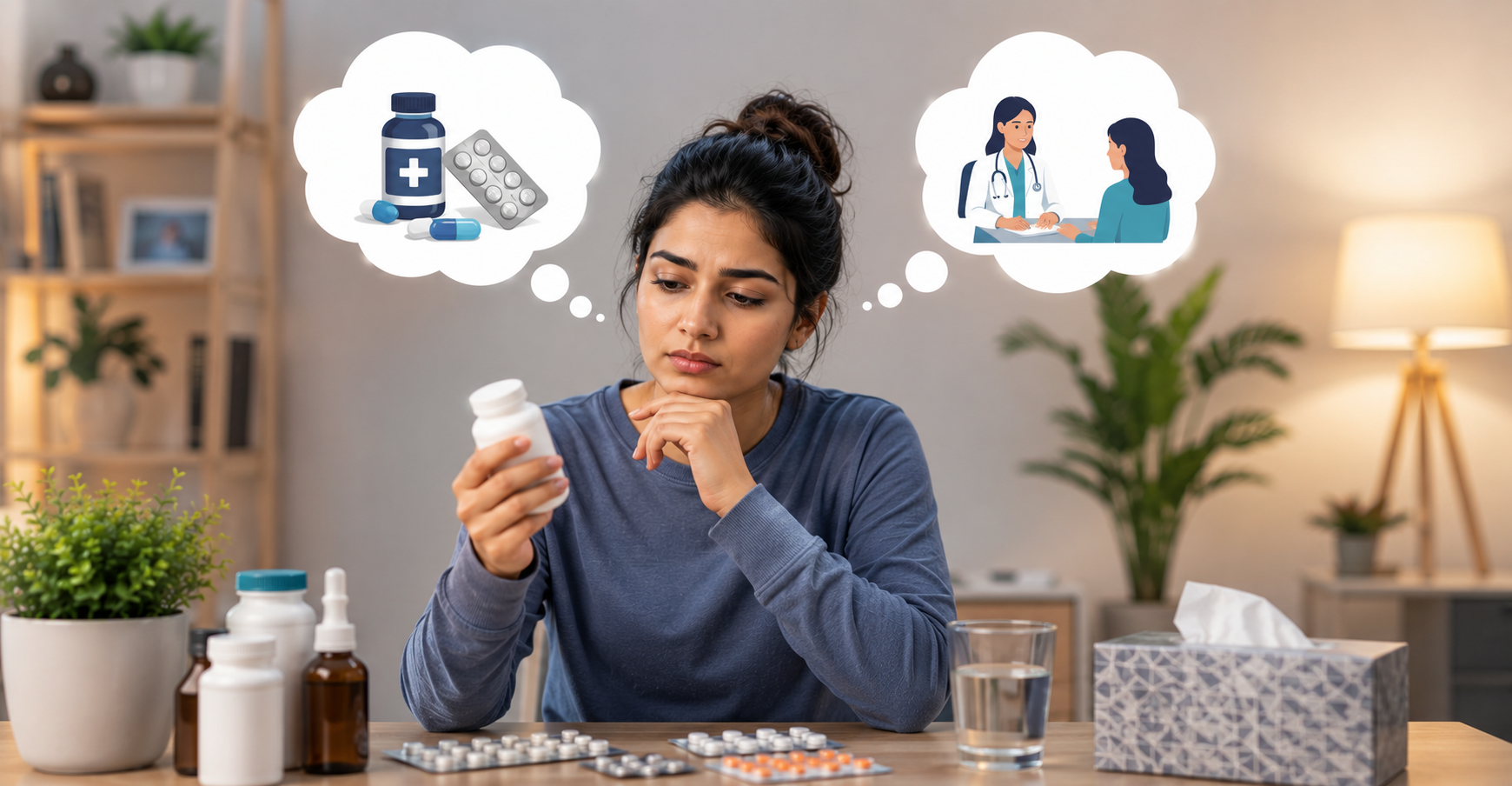
Self-medication means using medicines without direct guidance from a healthcare professional to treat symptoms, illnesses, or health concerns. It may include taking previously prescribed medicines again, using someone else’s prescription, choosing antibiotics without medical advice, or increasing doses because symptoms feel worse.
Common examples include:
-
Taking painkillers frequently for recurring headaches
-
Using antibiotics for fever or cold symptoms without a diagnosis
-
Taking acidity medicines repeatedly without finding the cause
-
Using leftover prescription medicines from a previous illness
-
Taking supplements without checking whether they are needed
Self-medication is not always harmful. Responsible self-care is an important part of health management. WHO recognizes self-care as a way people maintain health and manage certain conditions, but it emphasizes that self-care should be supported by reliable information and appropriate healthcare access.
The concern is not taking care of yourself. The concern is treating symptoms while missing the actual problem.
Also read: "17 Shocking Benefits Of Drinking Ajwain Water - Uses & Risks"
When Is Self-Care Usually Appropriate?
Self-care may be reasonable when:
-
Symptoms are mild
-
The cause is familiar
-
The condition improves within a short period
-
There are no warning signs
-
You are using medicines according to the official instructions
Examples may include:
-
Mild seasonal allergies
-
Minor muscle soreness after physical activity
-
Simple headaches related to stress or lack of sleep
-
Mild cold symptoms
-
Small cuts or minor skin irritation
Even in these situations, monitoring your condition matters. A symptom that does not improve or repeatedly returns deserves medical attention.
For example, a simple headache that improves with rest is different from a headache that becomes frequent, severe, or associated with vision changes, weakness, confusion, or vomiting.
When Should You Visit a Doctor Instead of Self-Medicating?
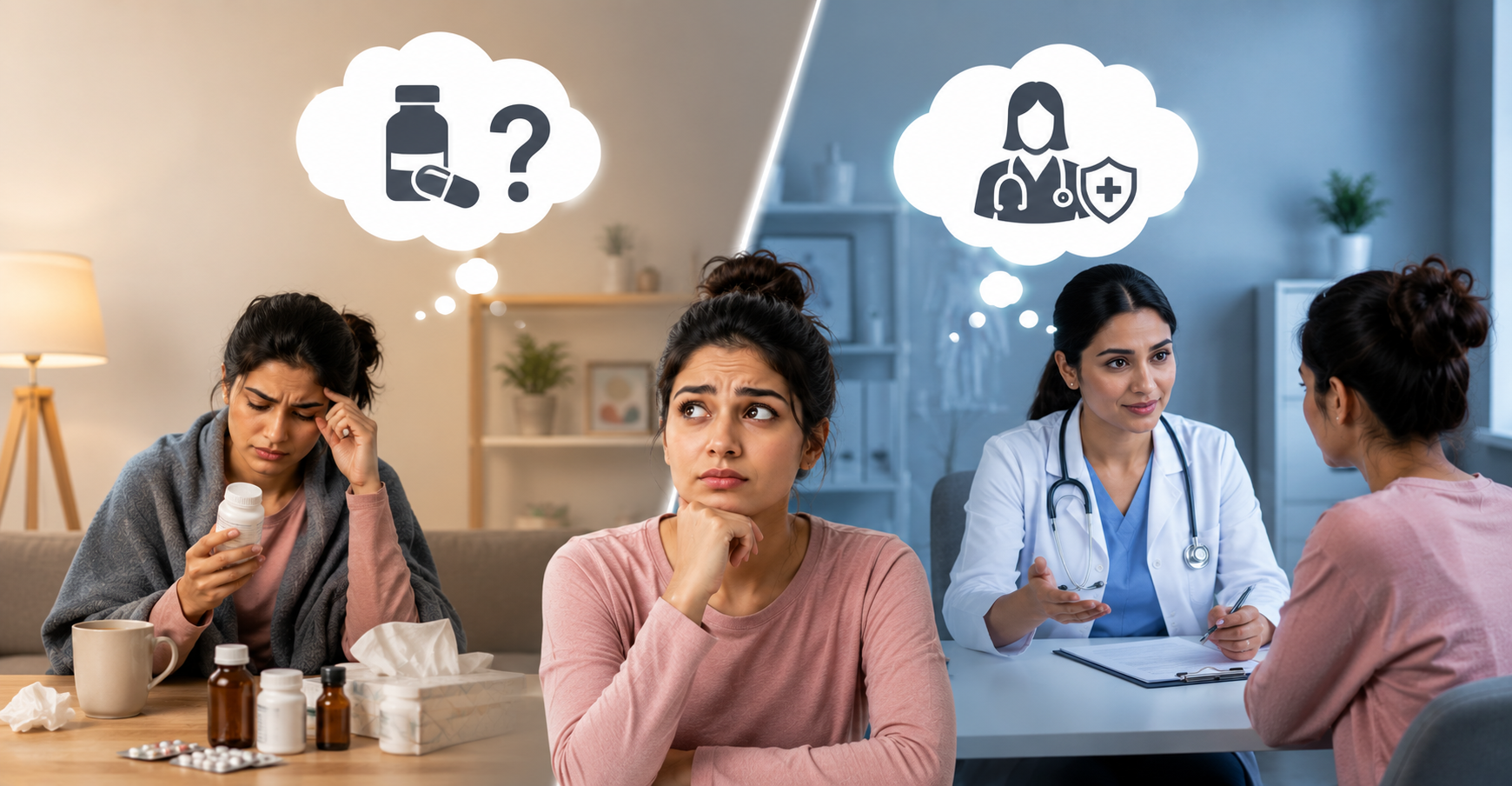
1. When Symptoms Persist Longer Than Expected
One of the clearest signs you need medical advice is when symptoms do not improve within a reasonable timeframe.
Many people continue taking the same medicine because it worked temporarily. However, recurring or persistent symptoms may indicate that the original cause has not been addressed.
Consider seeing a doctor if:
-
Symptoms continue for several days without improvement
-
Symptoms keep returning
-
Your condition gradually worsens
-
You need medicine repeatedly to feel normal
For example, repeated stomach pain treated with antacids may hide conditions such as infection, inflammation, food intolerance, or other digestive problems.
2. When Pain Is Severe, Unusual, or Different From Normal
Pain is the body’s warning system. Not every pain requires emergency care, but unusual or severe pain should not be ignored.
Seek medical advice if you experience:
-
Sudden severe pain
-
Pain after an injury
-
Pain that prevents normal activities
-
Pain with fever, swelling, weakness, or other symptoms
For example, severe muscle pain combined with breathing difficulty, dizziness, extreme weakness, or high fever requires medical evaluation rather than simple home treatment.
Related Articles:
- Walking 10,000 Steps A Day: Benefits, Calories Burned & Weight Loss Results
- 17 Health Benefits Of Tomatoes: Nutrition, Uses, Skin & Overall Wellness Guide
- How To Protect Yourself from Extreme Summer Heat In Pakistan
Emergency Warning Signs: Do Not Wait for Self-Medication
Some symptoms require urgent medical attention because they may indicate serious conditions.
Seek emergency care if you experience:
-
Chest pain or pressure
-
Difficulty breathing
-
Sudden weakness or paralysis
-
Confusion or loss of consciousness
-
Severe allergic reaction
-
Uncontrolled bleeding
-
Sudden severe headache, unlike previous headaches
-
Signs of stroke, such as facial drooping or speech difficulty
Emergency symptoms should never be managed by repeatedly taking painkillers or waiting for medicines to work.
Emergency guidance from healthcare systems such as the NHS emphasizes seeking urgent care for serious injuries and life-threatening symptoms rather than delaying evaluation.
Self-Medication vs Doctor Consultation: Key Differences
|
Situation |
Self-Care May Be Enough |
Doctor Consultation Is Better |
|
Duration |
Short-term symptoms improving |
Symptoms lasting or worsening |
|
Pain |
Mild and familiar discomfort |
Severe, unusual, or recurring pain |
|
Fever |
Mild fever with improvement |
Persistent high fever or additional symptoms |
|
Medicines |
Correct use of approved options |
Repeated use or prescription medicines |
|
Diagnosis |
Clear, common minor issue |
Unknown cause or multiple symptoms |
|
Risk Level |
Low-risk situation |
Pregnancy, chronic disease, elderly, children |
Why Self-Medicating Can Sometimes Be Dangerous

Masking Serious Health Problems
Some medicines reduce symptoms without treating the cause.
A painkiller may reduce discomfort, but the underlying issue may continue. A fever reducer may lower temperature while an infection progresses.
Temporary relief does not always mean recovery.
Incorrect Medicine Choice
Different illnesses can produce similar symptoms.
A cough can result from:
-
Viral infection
-
Allergies
-
Asthma
-
Acid reflux
-
Other respiratory conditions
Taking the wrong medicine may delay appropriate treatment.
Antibiotic Misuse and Resistance
One of the biggest concerns in self-medication is inappropriate antibiotic use.
Antibiotics work against certain bacterial infections, not viruses such as many common colds and flu-like illnesses. Incorrect antibiotic use contributes to antibiotic resistance, making infections harder to treat.
WHO identifies inappropriate antimicrobial use as a major example of irrational medicine use.
More read: "12 Easy & Effective Home Remedies For Swollen Gums"
Common Situations Where People Delay Seeing a Doctor
“It is only a headache”
Occasional mild headaches may improve with rest, hydration, and lifestyle changes.
However, medical advice is important when it comes to headaches:
-
Become frequent
-
Change pattern
-
Are unusually severe
-
Occur with neurological symptoms
“It is only stomach pain”
Recurring abdominal discomfort should not always be treated with over-the-counter medicines.
A doctor can help determine whether the cause involves:
-
Infection
-
Food-related problems
-
Inflammation
-
Digestive disorders
-
Other medical conditions
“The fever will go away”
A mild fever may improve naturally, but persistent fever, worsening symptoms, dehydration, or additional warning signs require evaluation.
How to Decide: A Simple Self-Assessment Guide
Before taking medicine, ask yourself:
1. Do I know the actual cause?
If the answer is no, avoid guessing repeatedly with medicines.
2. Is this symptom familiar?
A condition you have previously diagnosed may be different from a new or changing symptom.
3. Is it improving?
Improvement suggests recovery. Worsening suggests you may need medical advice.
4. Am I using medicine repeatedly?
Frequent reliance on the same medicine is a sign to investigate the underlying issue.
Related Articles:
- Top 25 Hydrating & Refreshing Drinks To Beat Summer Heat Naturally
- 7 Mistakes People Make On Eid Al-Fitr That Harm Their Health
- Different Types Of Weight Loss Surgery In Pakistan | Reasons, Risks & More
People Who Should Be More Careful With Self-Medication
Certain groups have higher risks from incorrect medicine use:
-
Pregnant individuals
-
Children
-
Older adults
-
People with kidney or liver problems
-
People taking multiple medicines
-
People with diabetes, heart disease, or other chronic conditions
Medical safety depends on personal health factors, not only symptoms.
How Doctors Add Value Beyond Prescribing Medicine
Many people think visiting a doctor only means receiving medication. In reality, medical care involves:
-
Identifying the actual cause
-
Checking risk factors
-
Preventing complications
-
Choosing appropriate treatment
-
Monitoring recovery
A doctor may recommend lifestyle changes, tests, observation, or medication depending on the situation.
Good healthcare is not always about taking more medicine. Sometimes the best decision is knowing what not to take.
How Apka Muaalij Can Help You Make Better Healthcare Decisions
When symptoms are confusing, persistent, or worrying, getting reliable medical guidance can save time and prevent unnecessary self-treatment.
Apka Muaalij helps people access healthcare support more conveniently, making it easier to discuss symptoms, understand possible next steps, and decide whether professional medical consultation is needed.
Instead of guessing with medication, connect with healthcare guidance to make informed choices about your health.
Frequently Asked Questions (FAQs)
Should I visit a doctor for symptoms that are mild?
Mild symptoms may improve with self-care, but you should consult a doctor if symptoms persist, worsen, repeatedly return, or appear with warning signs. The severity, duration, and overall health condition matter more than the symptom alone.
How long should I wait before seeing a doctor?
There is no universal waiting period because it depends on the symptom. Mild issues may improve within days, but persistent symptoms, worsening conditions, or unusual changes should be evaluated sooner.
Is taking medicine without a prescription always dangerous?
Not always. Some over-the-counter medicines are safe when used correctly. The risk increases when people use incorrect medicines, wrong doses, repeated treatments, or prescription drugs without medical guidance.
Can self-medication hide serious diseases?
Yes. Some medicines reduce symptoms temporarily while the underlying condition continues. This can delay diagnosis of infections, chronic illnesses, or other health problems.
When should I avoid self-medication completely?
Avoid self-medication when symptoms are severe, unexplained, recurring, rapidly worsening, or associated with emergency warning signs such as chest pain, breathing difficulty, or neurological changes.
Must read: "7 Incredible Health Benefits of Ispaghol (Psyllium Husk) & How to Take It"
Is it safe to take antibiotics for a fever?
No. Fever has many causes, and antibiotics only treat certain bacterial infections. Taking antibiotics without proper evaluation can cause side effects and contribute to antibiotic resistance.
Should children be given medicines without a doctor?
Children require extra caution because medicine doses often depend on age, weight, and medical condition. A healthcare professional should guide treatment, especially for infants and young children.
Why do symptoms return after taking medicine?
Symptoms may return because the medicine only controlled the symptoms and did not treat the underlying cause. Repeated symptoms should be evaluated rather than repeatedly managed at home.
Can online health information replace a doctor?
Online information can improve awareness, but cannot replace physical examination, medical history review, or professional diagnosis. Use reliable sources as preparation for healthcare discussions.
What is the biggest mistake people make with self-medication?
The biggest mistake is assuming symptom relief means the problem is solved. Temporary improvement does not always indicate that the underlying condition has been treated.
Disclaimer: This article provides general health information and is not a substitute for professional medical advice, diagnosis, or treatment. Symptoms and medical decisions vary from person to person. If you have severe symptoms, a medical emergency, or concerns about your health condition, seek advice from a qualified healthcare professional.

Find & Book the best "General Physician" near you
Book Appointment