

Fistula Surgery: Symptoms, Recovery, Risks, Cost in Pakistan & More


An anal fistula can be a painful, frustrating, and often embarrassing condition that significantly affects daily life. Persistent discharge, swelling, recurring abscesses, and discomfort while sitting or passing stool can make even routine activities challenging. While medications may help manage symptoms temporarily, surgery remains the most effective treatment for most anal fistulas.
Understanding fistula surgery is important because delaying treatment can increase the risk of recurrent infections, worsening symptoms, and damage to surrounding tissues. Many patients also have concerns about the success rate of surgery, recovery time, complications, and the overall fistula surgery cost in Pakistan.
This comprehensive guide explains everything you need to know about anal fistula surgery, including symptoms, causes, diagnosis, treatment options, recovery, risks, expected outcomes, and fistula surgery price in Pakistan. Whether you are considering surgery yourself or seeking information for a loved one, this article will help you make informed healthcare decisions based on current medical evidence.
If you are experiencing persistent anal pain, discharge, or recurrent abscesses, consult a qualified colorectal specialist through Apka Muaalij or call 042-32377001 for professional guidance and treatment options.
Key Takeaways
-
Anal fistulas usually develop after an anal abscess and rarely heal permanently without treatment.
-
Surgery remains the most effective treatment for most anal fistulas.
-
Fistulotomy is commonly used for simple fistulas and has high success rates.
-
Recovery generally ranges from several weeks to a few months.
-
Fistula surgery cost in Pakistan varies widely depending on procedure complexity and healthcare facility.
-
Early diagnosis and treatment help reduce complications and recurrence.
-
Proper postoperative care plays a major role in successful healing.
What Is an Anal Fistula?
An anal fistula is an abnormal tunnel that develops between the inside of the anal canal and the skin around the anus.
Most anal fistulas occur after an anal abscess, where an infection forms a pocket of pus near the anus. Even after the abscess drains, a tunnel may remain, resulting in a fistula.
Must read: Hernia Surgery In Pakistan: Types, Symptoms, Recovery, Risks & Cost
Symptoms of an Anal Fistula
The symptoms can vary depending on the size, location, and complexity of the fistula.
Common Symptoms
-
Persistent pain around the anus
-
Swelling near the anal opening
-
Recurrent anal abscesses
-
Pus or bloody discharge
-
Irritation of the surrounding skin
-
Pain during bowel movements
-
Foul-smelling drainage
-
Fever (in cases of active infection)
-
Fatigue and discomfort
When to Seek Medical Attention
Seek medical care immediately if you experience:
-
Severe anal pain
-
Fever and chills
-
Increasing swelling
-
Difficulty sitting
-
Significant bleeding
-
Recurrent infections
What Causes an Anal Fistula?
Approximately 80–90% of anal fistulas develop following an anal abscess.
Common Causes
-
Anal gland infection
-
Perianal abscess
-
Radiation injury
-
Trauma to the anal area
-
Previous anorectal surgery
-
Sexually transmitted infections (rare)
Risk Factors
-
Smoking
-
Weakened immune system
-
Poor wound healing
Also read: 10 Causes Of Low Blood Pressure You Shouldn’t Ignore
Types of Anal Fistulas
Understanding the fistula type helps determine the best surgical approach.
|
Type |
Description |
|
Intersphincteric |
Most common: passes between sphincter muscles |
|
Transsphincteric |
Crosses the external sphincter muscle |
|
Suprasphincteric |
Extends above the sphincter muscles |
|
Extrasphincteric |
Rare and often complex |
|
Complex Fistula |
Multiple tracts or associated disease |
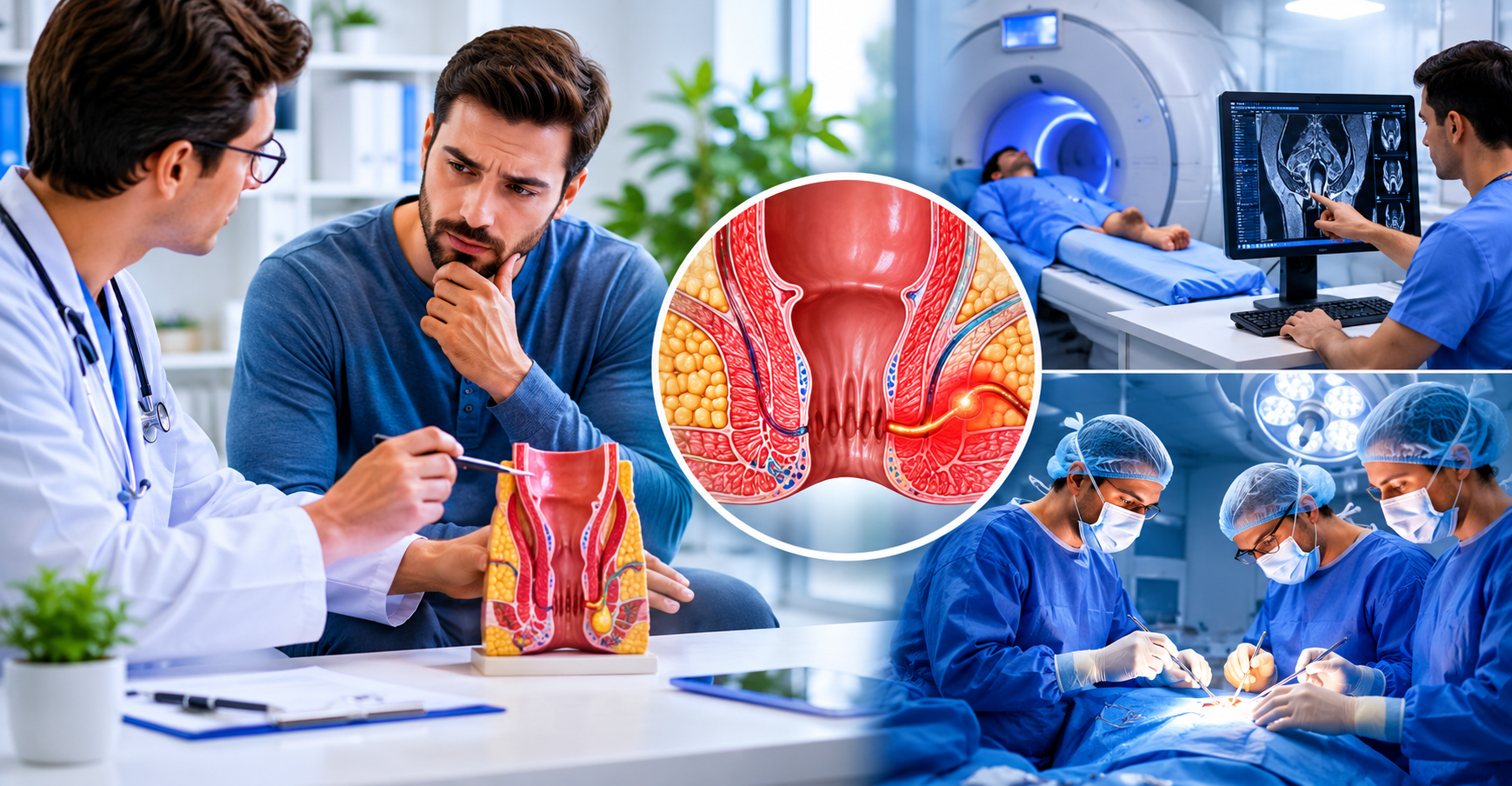
How Is an Anal Fistula Diagnosed?
Diagnosis typically begins with a medical history and physical examination.
Diagnostic Tests
-
Clinical examination
-
Digital rectal examination
-
Anoscopy
-
MRI pelvis
-
CT scan (selected cases)
-
Colonoscopy (if Crohn's disease is suspected)
Why MRI Is Important
MRI is considered one of the most accurate imaging methods for identifying complex fistula tracts and planning surgery.
Research published in the journal Diseases of the Colon & Rectum demonstrates that MRI significantly improves preoperative assessment and surgical outcomes.
Read: 9 Signs You Need A Doctor For Stomach Pain | Symptoms & Treatments
What Is Fistula Surgery?
Fistula surgery refers to procedures designed to remove or close the abnormal tract while preserving bowel control.
The ideal surgery depends on:
-
Fistula location
-
Complexity
-
Involvement of sphincter muscles
-
Previous surgeries
-
Underlying diseases
Types of Anal Fistula Surgery
1. Fistulotomy
The most common procedure for simple fistulas.
How It Works
The surgeon opens the fistula tract completely, allowing it to heal from the inside outward.
Advantages
-
High success rate
-
Lower recurrence
-
Relatively straightforward procedure
Best For
Simple fistulas with minimal sphincter involvement.
2. Seton Placement
A surgical thread or rubber band is inserted through the fistula.
Benefits
-
Controls infection
-
Allows drainage
-
Protects sphincter muscles
Common Use
Complex fistulas.
3. Advancement Flap Procedure
Healthy tissue is used to cover the internal opening after cleaning the tract.
Suitable For
-
Complex fistulas
-
Patients at risk of incontinence
4. LIFT Procedure
Ligation of Intersphincteric Fistula Tract (LIFT) is a sphincter-preserving technique.
Advantages
-
Less risk of incontinence
-
Good healing outcomes
-
Faster recovery in selected patients
5. Fibrin Glue and Bioprosthetic Plug
Minimally invasive methods used in selected cases.
Limitations
-
Lower long-term success rates
-
Possible recurrence
Also read: When Is Fever Dangerous? Symptoms, Causes & Warning Signs
Fistula Surgery Cost in Pakistan
The cost of fistula surgery in Pakistan varies considerably based on several factors.
Estimated Fistula Surgery Price in Pakistan
|
Procedure Type |
Estimated Cost (PKR) |
|
Simple Fistulotomy |
40,000 – 100,000 |
|
Seton Placement |
50,000 – 120,000 |
|
LIFT Procedure |
80,000 – 180,000 |
|
Advancement Flap Surgery |
100,000 – 250,000+ |
|
Complex Fistula Surgery |
150,000 – 350,000+ |
Factors Affecting Cost
-
Hospital location
-
Private vs public facility
-
Surgeon experience
-
Diagnostic investigations
-
Anesthesia fees
-
Length of hospital stay
-
Complexity of fistula
Cost by Major Cities
Generally, treatment costs are higher in:
-
Lahore
-
Karachi
-
Islamabad
-
Rawalpindi
Government hospitals may offer significantly lower costs compared with private institutions.
Must read: 5 Causes Of Early Discharge You Must Know & Proven Solutions

Fistula Surgery Recovery
Recovery varies according to the type of surgery performed and individual healing factors.
Typical Recovery Timeline
|
Recovery Stage |
Expected Time |
|
Initial healing |
1–2 weeks |
|
Return to desk work |
1–2 weeks |
|
Moderate activities |
2–4 weeks |
|
Complete healing |
4–12 weeks |
|
Complex fistula healing |
Several months |
What to Expect After Surgery
Patients commonly experience:
-
Mild pain
-
Small amount of drainage
-
Temporary swelling
-
Fatigue during the first few days
These symptoms usually improve gradually.
Recovering after fistula surgery requires proper follow-up care. If you have concerns about wound healing, infection, or postoperative pain, consult an experienced colorectal specialist through Apka Muaalij or call 042-32377001 for personalized support.
Postoperative Care Tips
For Faster Healing
-
Take prescribed medications
-
Maintain hygiene
-
Use warm sitz baths
-
Drink adequate water
-
Eat fiber-rich foods
-
Avoid straining during bowel movements
-
Follow the surgeon's instructions carefully
Recommended Foods
-
Whole grains
-
Fruits
-
Vegetables
-
Lentils
-
Yogurt
-
Adequate fluids
These foods help prevent constipation and reduce discomfort.
Read: 9 Potential Symptoms of High Blood Pressure - Causes & Treatments
Risks of Fistula Surgery
Although fistula surgery is generally safe, complications can occur.
Possible Risks
-
Bleeding
-
Infection
-
Delayed wound healing
-
Recurrence
-
Anal stenosis
-
Fecal incontinence
-
Persistent drainage
-
Pain
Risk Comparison
|
Complication |
Frequency |
|
Mild pain |
Common |
|
Temporary drainage |
Common |
|
Infection |
Uncommon |
|
Recurrence |
Variable |
|
Incontinence |
Rare in appropriate procedures |
The risk depends heavily on fistula complexity and surgical technique.
Success Rate of Fistula Surgery
Success rates vary by procedure and fistula type.
Approximate Outcomes
-
Fistulotomy: often exceeds 90% for simple fistulas
-
LIFT procedure: approximately 60–90%
-
Advancement flap: approximately 60–80%
-
Complex fistulas: variable outcomes
Published studies in The Lancet Gastroenterology & Hepatology and the American Society of Colon and Rectal Surgeons (ASCRS) guidelines emphasize individualized treatment planning to maximize healing and preserve continence.
Potential Complications of Untreated Anal Fistula
Ignoring symptoms can lead to:
-
Recurrent abscess formation
-
Persistent pain
-
Multiple fistula tracts
-
Reduced quality of life
-
Rarely, long-standing fistulas may be associated with cancerous changes
Early treatment generally leads to better outcomes.
If you are considering fistula surgery or need a second opinion regarding treatment options, connect with qualified colorectal surgeons through Apka Muaalij or call 042-32377001 to discuss the most appropriate care plan for your condition.
Must read: 10 STD Symptoms You Should NEVER Ignore
Can Anal Fistulas Be Prevented?
Not all fistulas are preventable, but certain measures may reduce risk.
Prevention Strategies
-
Seek early treatment for anal abscesses
-
Control Crohn's disease
-
Maintain good hygiene
-
Manage diabetes effectively
-
Avoid smoking
-
Follow a healthy diet
-
Stay physically active
Conclusion
An anal fistula is a chronic condition that can significantly impact comfort, hygiene, and quality of life. Fortunately, modern surgical techniques offer effective treatment options with success rates and improved preservation of bowel function. The best procedure depends on the type of fistula, its complexity, and the patient's overall health.
Understanding symptoms early, seeking timely medical evaluation, and following postoperative care instructions can greatly improve outcomes. While fistula surgery costs in Pakistan vary based on several factors, obtaining expert care remains essential to prevent recurrence and complications.
Anyone experiencing persistent anal pain, discharge, swelling, or recurrent abscesses should seek medical assessment from a qualified colorectal specialist.
Frequently Asked Questions (FAQs)
1. Is fistula surgery painful?
Most patients experience mild to moderate discomfort after surgery, which is usually controlled with prescribed pain medications. Pain generally improves within a few days to weeks.
2. How long does fistula surgery take?
The procedure usually takes between 30 minutes and 2 hours, depending on the complexity of the fistula and the surgical method used.
3. Can a fistula heal without surgery?
Most anal fistulas do not heal permanently without surgical treatment. Temporary symptom relief may occur, but recurrence is common.
4. What is the success rate of anal fistula surgery?
Success rates vary by procedure. Simple fistulotomy often has success rates above 90%, while complex fistulas may require multiple treatments.
5. How long is the recovery after fistula surgery?
Recovery can range from a few weeks to several months, depending on the type of surgery and the complexity of the fistula.
6. Is hospitalization required?
Some procedures are performed as day surgeries, while more complex cases may require overnight hospitalization.
7. Can fistula surgery affect bowel control?
Modern sphincter-preserving techniques significantly reduce the risk of incontinence. However, risk varies according to fistula location and surgical approach.
8. What foods should I avoid after surgery?
Avoid highly processed foods, inadequate fluid intake, and foods that cause constipation. A high-fiber diet is generally recommended.
9. Is fistula surgery covered by insurance in Pakistan?
Coverage depends on the insurance provider and policy terms. Patients should verify benefits directly with their insurer.
10. When should I see a doctor after surgery?
Seek medical attention if you develop fever, increasing pain, excessive bleeding, worsening swelling, or signs of infection.
Disclaimer: This article is intended for educational and informational purposes only. It is not a substitute for professional medical advice, diagnosis, or treatment. Always consult a qualified healthcare professional regarding any medical condition, symptoms, treatment decisions, or health concerns.

Find & Book the best "General Surgeon" near you
Book Appointment