

Hernia Surgery In Pakistan: Types, Symptoms, Recovery, Risks & Cost


A hernia can start as a small bulge or mild discomfort and gradually become painful enough to interfere with walking, lifting, exercise, prayer, sleep, or even simple daily movement. Many people ignore early symptoms for months because the pain comes and goes. Others worry about surgery, recovery time, or treatment costs in Pakistan.
The reality is that hernias do not heal on their own. In most cases, surgery is the only definitive treatment. Modern surgical techniques, especially laparoscopic and mesh-based repair, have significantly improved recovery outcomes and reduced recurrence rates.
This guide explains everything patients and families need to know about hernia surgery in Pakistan, including symptoms, types of hernias, treatment options, surgical procedures, recovery timelines, complications, risks, and estimated costs.
If you are experiencing groin swelling, abdominal pain, or a visible bulge, early consultation with a qualified surgeon can help prevent complications.
Apka Muaalij connects patients across Pakistan with experienced general surgeons and laparoscopic surgeons for diagnosis, imaging, surgery planning, and second opinions.
Key Takeaways
-
Hernias do not heal naturally and often require surgical repair.
-
Inguinal hernias are the most common type, especially in men.
-
Laparoscopic surgery usually offers faster recovery and smaller scars.
-
Surgical mesh reduces recurrence risk in most patients.
-
Delaying treatment can lead to bowel obstruction or strangulation.
-
Hernia surgery costs in Pakistan vary widely depending on hospital, technique, and complexity.
Also read: " 11 Tips For Increasing Sexual Stamina & Performance Naturally "
What Is a Hernia?
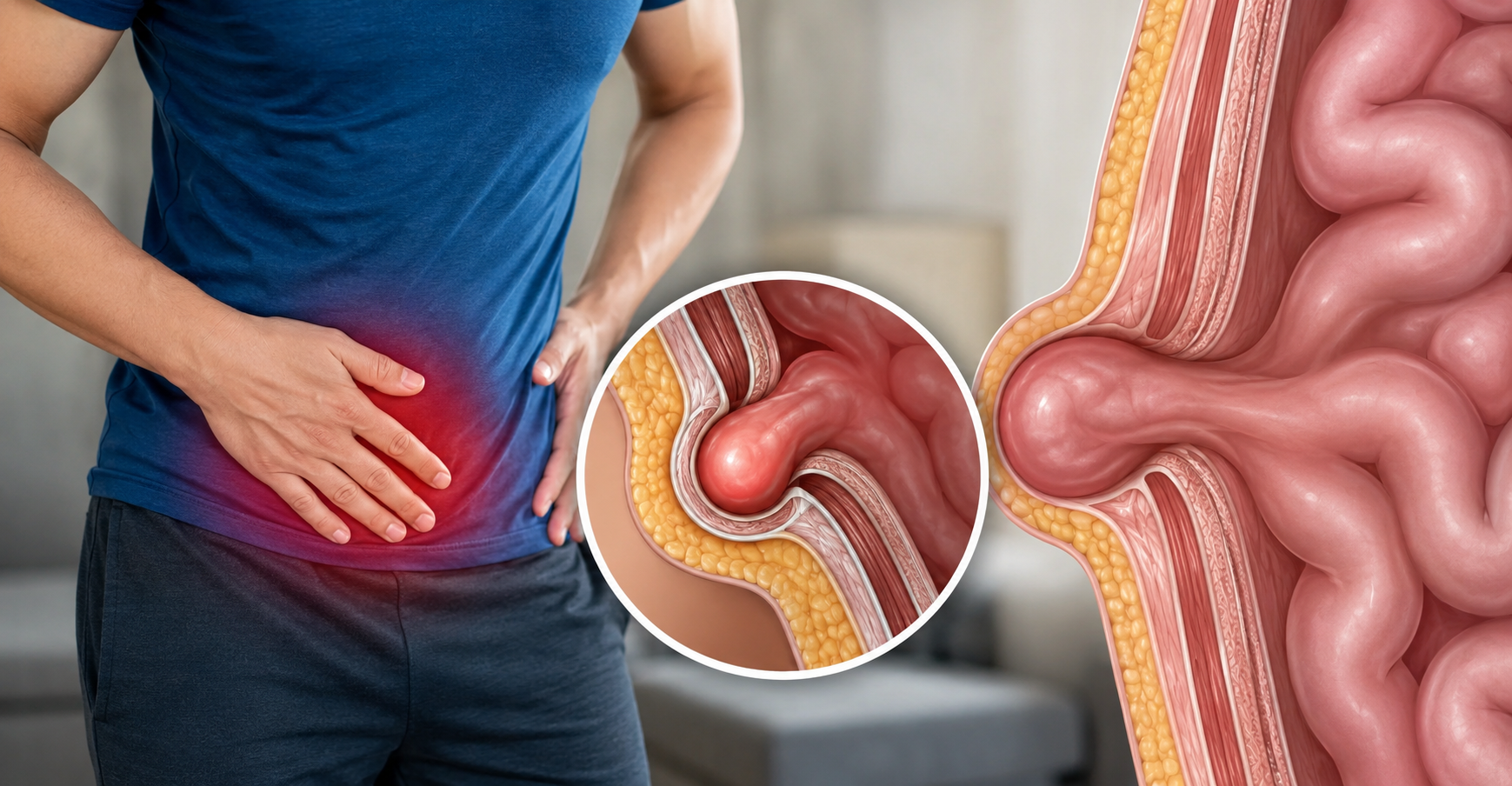
A hernia occurs when an internal organ or tissue pushes through a weak spot in the surrounding muscle or connective tissue. Most hernias develop in the abdominal wall or groin.
The condition often appears as a visible lump or bulge that becomes more noticeable during coughing, lifting, bending, or straining.
ہرنیا کیا ہوتا ہے؟
ہرنیا ایک ایسی حالت ہے جس میں جسم کا کوئی اندرونی عضو یا ٹشو کمزور پٹھوں یا بافتوں کی دیوار سے باہر کی طرف ابھر آتا ہے۔ زیادہ تر ہرنیا پیٹ یا گروئن (ران اور پیٹ کے درمیانی حصے) میں ہوتا ہے۔
یہ عموماً جسم پر ایک ابھار یا گلٹی کی صورت میں ظاہر ہوتا ہے، جو کھانسی کرنے، وزن اٹھانے، جھکنے یا زور لگانے کے دوران زیادہ نمایاں محسوس ہوتی ہے۔
Common Symptoms of a Hernia
Symptoms vary depending on the type and severity of the hernia.
Most Common Hernia Symptoms
-
A visible bulge in the abdomen or groin
-
Pain or pressure while lifting
-
Burning or aching sensation
-
Groin heaviness
-
Swelling near the testicles in men
-
Pain that worsens with coughing
-
Discomfort after prolonged standing
-
Feeling of weakness in the abdominal wall
Warning Signs That Need Urgent Medical Attention
Seek immediate medical care if you experience:
-
Severe sudden pain
-
Fever with abdominal swelling
-
The hernia is becoming hard or discolored.
-
Inability to push the bulge back in
-
Constipation or bowel obstruction symptoms
These may indicate a strangulated hernia, which is a surgical emergency.
Also read: "Preventing Cavities In Teenagers: A Parent’s Guide"
Types of Hernias
Different hernias affect different anatomical areas. Correct diagnosis determines the surgical approach.
1. Inguinal Hernia
An inguinal hernia occurs in the groin when tissue pushes through the inguinal canal.
It is the most common type of hernia, particularly in men.
Symptoms
-
Groin bulge
-
Pain while walking or lifting
-
Scrotal swelling
-
Heaviness in the groin
Risk Factors
-
Heavy lifting
-
Chronic cough
-
Constipation
-
Smoking
-
Family history
2. Umbilical Hernia
This develops near the belly button.
Umbilical hernias are common in infants, pregnant women, and overweight adults.
Symptoms
-
Swelling near the navel
-
Mild abdominal pain
-
Bulge during coughing or standing
3. Hiatal Hernia
A hiatal hernia occurs when part of the stomach pushes through the diaphragm into the chest cavity.
Common Symptoms
-
Acid reflux
-
Heartburn
-
Chest discomfort
-
Difficulty swallowing
Not all hiatal hernias require surgery. Many are managed with medication and lifestyle changes.
4. Incisional Hernia
This type develops at the site of a previous surgical incision where the abdominal wall has weakened.
Risk Factors
-
Prior abdominal surgery
-
Obesity
-
Infection after surgery
-
Poor wound healing
5. Femoral Hernia
Femoral hernias occur lower in the groin and are more common in women.
Although less common, they carry a higher risk of strangulation.
Causes and Risk Factors
Hernias usually develop due to increased pressure combined with muscle weakness.
Common Causes
-
Aging-related muscle weakness
-
Heavy lifting
-
Chronic constipation
-
Pregnancy
-
Obesity
-
Persistent coughing
-
Smoking
-
Previous surgery
-
Strenuous physical activity
Who Is at Higher Risk?
-
Construction workers
-
Weightlifters
-
Elderly individuals
-
Smokers
-
Patients with chronic lung disease
-
People with a family history of hernias
Also read: "When Is Fever Dangerous? Symptoms, Causes & Warning Signs"
How Hernias Are Diagnosed
Most hernias are diagnosed through physical examination. Diagnostic methods:
|
Diagnostic Tool |
Purpose |
|
Physical examination |
Detect visible or palpable bulge |
|
Ultrasound |
Confirms soft tissue protrusion |
|
CT scan |
Evaluates complicated hernias |
|
MRI |
Used in unclear or recurrent cases |
|
Endoscopy |
Sometimes used for a hiatal hernia |
What Happens During Evaluation?
A surgeon typically asks the patient to stand, cough, or strain while examining the affected area. Imaging is recommended when symptoms are unclear or when recurrent hernias are suspected.
When Is Hernia Surgery Necessary?
Not every hernia requires immediate surgery, but most eventually need repair.
Surgery Is Usually Recommended If:
-
Pain is worsening
-
The bulge is enlarging.
-
Daily activities are affected
-
There is a risk of bowel entrapment
-
The hernia becomes non-reducible
-
Complications are suspected
Can a Hernia Heal Without Surgery?
No. Hernias do not close naturally in adults. Support belts may temporarily reduce discomfort, but do not repair the underlying defect.
Types of Hernia Surgery
Modern hernia repair focuses on strengthening the abdominal wall while minimizing recurrence and recovery time.
1. Open Hernia Repair
In open surgery, the surgeon makes an incision over the hernia site and pushes the protruding tissue back into place.
The weakened muscle is repaired using stitches, surgical mesh, or both.
Advantages
-
Effective for large hernias
-
Widely available in Pakistan
-
Suitable for emergency surgery
Limitations
-
Longer recovery
-
Larger incision
-
More postoperative discomfort
2. Laparoscopic Hernia Surgery
Laparoscopic surgery uses small incisions and a camera-guided surgical system.
The surgeon repairs the hernia internally using specialized instruments and mesh placement.
Benefits
-
Smaller scars
-
Less pain
-
Faster recovery
-
Earlier return to work
-
Lower infection risk
Limitations
-
Higher cost
-
Requires general anesthesia
-
Not suitable for all patients
3. Robotic Hernia Surgery
Robotic-assisted surgery is available in selected tertiary hospitals.
It offers enhanced precision and visualization but remains expensive and less widely accessible in Pakistan.
Hernia Mesh Repair Explained
Most modern hernia surgeries use surgical mesh to reinforce weak tissue.
Why Mesh Is Used
-
Reduces recurrence risk
-
Strengthens the abdominal wall
-
Improves long-term durability
Are Mesh Repairs Safe?
Mesh repair is considered standard practice worldwide. However, complications such as chronic pain, infection, or mesh migration can occur in rare cases.
The overall complication rate remains low when surgery is performed by experienced surgeons.
Also read: "7 Common Monsoon Diseases In Pakistan – Causes, Symptoms & Prevention Tips"
Open vs Laparoscopic Hernia Surgery
|
Feature |
Open Surgery |
Laparoscopic Surgery |
|
Incision Size |
Larger |
Small keyhole incisions |
|
Recovery Time |
Longer |
Faster |
|
Pain After Surgery |
More common |
Usually less |
|
Hospital Stay |
1–3 days |
Often same day or overnight |
|
Cost in Pakistan |
Lower |
Higher |
|
Best For |
Large or complicated hernias |
Bilateral or recurrent hernias |
What Happens Before Hernia Surgery?
Preoperative evaluation helps reduce complications.
Common Pre-Surgery Tests
-
Anesthesia assessment
Patients May Be Asked To
-
Stop smoking
-
Avoid blood thinners
-
Fast before surgery
-
Control diabetes or blood pressure
What Happens During Hernia Surgery?
Step-by-step overview:
-
The patient receives anesthesia.
-
The surgeon accesses the hernia site.
-
The protruding tissue is repositioned.
-
Weak muscle tissue is repaired.
-
Mesh may be placed for reinforcement.
-
Incisions are closed carefully.
Most uncomplicated surgeries take between 30 minutes and 2 hours.
Hernia Surgery Recovery Timeline
Recovery varies based on the hernia type, surgical method, age, and overall health.
Typical Recovery Timeline
|
Recovery Stage |
Expected Timeline |
|
Walking after surgery |
Same day or next day |
|
Mild daily activities |
3–7 days |
|
Return to office work |
1–2 weeks |
|
Heavy lifting |
4–6 weeks |
|
Full recovery |
6–8 weeks |
Recovery Tips After Hernia Surgery
How to Recover Faster
-
Walk regularly to prevent blood clots
-
Avoid lifting heavy objects
-
Stay hydrated
-
Prevent constipation
-
Take pain medication as prescribed
-
Follow wound care instructions carefully
Foods That Support Recovery
-
High-fiber foods
-
Protein-rich meals
-
Fruits and vegetables
-
Adequate fluids
Constipation after surgery can strain the repair site and increase pain.
Pain After Hernia Surgery
Mild to moderate pain is common during the first few days.
Normal Symptoms
-
Soreness
-
Tightness
-
Bruising
-
Mild swelling
When Pain Is Concerning
Contact your surgeon if pain becomes severe, persistent, or associated with fever or redness.
Persistent swelling, fever, wound discharge, or worsening pain after hernia surgery should not be ignored.
Through Apka Muaalij, patients can book follow-up consultations, imaging tests, and second opinions with qualified specialists across Pakistan.
Risks and Complications of Hernia Surgery
Hernia repair is generally safe, but every surgery carries risks.
Possible Complications
-
Infection
-
Bleeding
-
Chronic pain
-
Mesh complications
-
Recurrence
-
Nerve injury
-
Fluid collection
-
Blood clots
Risk of Hernia Recurrence
Recurrence rates vary depending on:
-
Surgical technique
-
Mesh use
-
Smoking status
-
Obesity
-
Postoperative strain
Modern mesh repairs have significantly lowered recurrence rates compared with older tissue-only repairs.
Can Hernias Return After Surgery?
Yes, recurrence is possible.
Common Reasons for Recurrence
-
Early heavy lifting
-
Poor surgical healing
-
Obesity
-
Chronic coughing
-
Smoking
-
Infection
-
Weak connective tissue
Following postoperative instructions carefully greatly reduces risk.
Hernia Surgery Cost in Pakistan
The cost of hernia surgery in Pakistan varies based on:
-
City
-
Surgeon experience
-
Open vs laparoscopic surgery
-
Mesh quality
-
Room category
-
Complexity of the hernia
Estimated Hernia Surgery Cost in Pakistan
|
Procedure Type |
Approximate Cost |
|
Open inguinal hernia surgery |
PKR 80,000–180,000 |
|
Laparoscopic hernia repair |
PKR 180,000–450,000 |
|
Complex or recurrent hernia surgery |
PKR 300,000+ |
|
Government hospitals |
Lower subsidized costs |
Costs may differ substantially between private tertiary hospitals and public institutions.
Best Hospitals for Hernia Surgery in Pakistan
Major cities offer experienced general and laparoscopic surgeons.
Cities With Advanced Surgical Facilities
When choosing a surgeon, patients should evaluate:
-
Board certification
-
Hernia surgery experience
-
Laparoscopic expertise
-
Hospital infection control standards
-
Patient reviews and outcomes
How to Choose the Right Hernia Surgeon
-
How many hernia surgeries do you perform yearly?
-
Is laparoscopic surgery suitable for my case?
-
Will mesh be used?
-
What are the recurrence rates?
-
What restrictions will I have after surgery?
-
What complications should I watch for?
Surgeon experience strongly influences outcomes, especially in recurrent or complex hernias.
Lifestyle Changes That Help Prevent Hernias
While not all hernias are preventable, certain lifestyle changes reduce risk.
Prevention Strategies
-
Maintain a healthy body weight
-
Avoid smoking
-
Treat chronic cough
-
Use proper lifting technique
-
Prevent constipation
-
Strengthen core muscles gradually
Hernia Surgery in Elderly Patients
Older adults may delay surgery because of fear of anesthesia or recovery concerns.
However, untreated hernias in elderly individuals carry higher risks of obstruction and strangulation.
Important Considerations
-
Comprehensive cardiac evaluation
-
Medication review
-
Frailty assessment
-
Early mobilization after surgery
Laparoscopic techniques may reduce recovery burden in selected older patients.
Must read: 9 Signs You Need A Doctor For Stomach Pain
Hernia Surgery During Pregnancy
Most hernias during pregnancy are managed conservatively unless complications occur.
Elective surgery is often postponed until after delivery unless there is severe pain or a risk.
Umbilical hernias are relatively common during pregnancy due to increased abdominal pressure.
Is Hernia Surgery Painful?
Most patients experience manageable discomfort rather than severe pain.
Modern anesthesia, minimally invasive techniques, and improved pain control protocols have significantly improved postoperative comfort.
Many laparoscopic surgery patients walk within hours of the procedure.
How Long Does Hernia Surgery Take?
Most routine hernia procedures take:
-
30–60 minutes for simple repairs
-
1–2 hours for laparoscopic or complex cases
Hospital stay depends on the patient's condition and procedure type.
What Happens If a Hernia Is Left Untreated?
Ignoring a hernia can lead to serious complications.
Potential Consequences
-
Increasing pain
-
Enlargement of the hernia
-
Bowel obstruction
-
Strangulation
-
Reduced blood supply to trapped tissue
-
Emergency surgery
Emergency hernia surgery carries greater risks than planned elective repair.
Final Thoughts
Hernia surgery has evolved considerably over the past two decades. Earlier intervention, better imaging, laparoscopic techniques, and improved mesh technology have made treatment safer and recovery faster for most patients.
The biggest mistake many patients make is delaying evaluation until the hernia becomes painful or complicated. Elective surgery is almost always safer and less stressful than emergency treatment.
Need Expert Guidance for Hernia Treatment?
Whether you need hernia diagnosis, laparoscopic surgery, imaging, or a second opinion, Apka Muaalij can help you connect with experienced surgeons and hospitals across Pakistan.
📞 Call 042-32377001 or book an online consultation today.
Frequently Asked Questions (FAQs)
Is hernia surgery safe?
Yes. Hernia surgery is considered a routine and generally safe procedure when performed by experienced surgeons. Complication rates are relatively low, particularly in elective surgeries using modern techniques and proper postoperative care.
How long does recovery take after hernia surgery?
Most patients resume light daily activities within a week. Office work often becomes possible in 1–2 weeks, while heavy lifting usually requires 4–6 weeks of restriction, depending on the surgical method.
Can a hernia come back after surgery?
Yes, recurrence is possible, though modern mesh repair has significantly reduced recurrence rates. Smoking, obesity, infection, heavy lifting, and poor healing increase the likelihood of recurrence.
Which is better: open or laparoscopic hernia surgery?
Laparoscopic surgery generally offers faster recovery, less pain, and smaller scars. Open surgery may still be preferred for very large, strangulated, or complicated hernias.
Can I walk after hernia surgery?
Yes. Early walking is encouraged after surgery because it improves circulation, reduces blood clot risk, and supports recovery. Patients should still avoid strenuous activity during the healing phase.
What type of doctor treats hernias?
General surgeons and laparoscopic surgeons typically diagnose and treat hernias. Complex abdominal wall reconstruction may require specialized hernia surgeons in tertiary care hospitals.
Disclaimer: This article is intended for educational and informational purposes only and should not replace professional medical advice, diagnosis, or treatment. Hernia symptoms and treatment options vary between individuals. Always consult a qualified healthcare professional or surgeon for personalized evaluation and treatment recommendations.

Find & Book the best "General Surgeon" near you
Book Appointment