

Low Testosterone Symptoms In Men: Causes, Tests & Natural Treatment


Feeling constantly tired, losing muscle despite exercise, struggling with low libido, or noticing changes in mood can be frustrating and confusing. Many men assume these issues are simply part of aging, stress, or a busy lifestyle. However, they may be linked to low testosterone levels.
Testosterone is the primary male sex hormone responsible for muscle growth, bone strength, sexual function, energy levels, mood regulation, and overall health. When testosterone levels fall below normal, men can experience a wide range of physical, emotional, and sexual symptoms that affect quality of life.
Low testosterone, also known as male hypogonadism, becomes more common with age but can also occur in younger men due to obesity, chronic illness, medications, sleep disorders, or hormonal conditions.
In this comprehensive guide, you'll learn the symptoms of low testosterone, common causes, diagnostic tests, natural treatment options, medical therapies, and when to seek professional help.
Must read: "Male Infertility In Pakistan: Symptoms, Tests, Treatment & Top Doctors"
Need Expert Guidance?
If you are experiencing symptoms such as low libido, fatigue, erectile dysfunction, or unexplained muscle loss, consult a qualified healthcare professional, including urologists and endocrinologists, for proper evaluation. For specialist guidance and online consultation support, contact Apka Muaalij at 042-32377001.
Key Takeaways
-
Low testosterone can affect sexual health, energy, mood, muscle mass, and overall well-being.
-
Common symptoms include fatigue, reduced libido, erectile dysfunction, and increased body fat.
-
Obesity, diabetes, aging, sleep disorders, and chronic illnesses are common risk factors.
-
Diagnosis requires blood testing and professional medical evaluation.
-
Lifestyle changes can improve hormone health in many men.
-
Testosterone replacement therapy may help selected patients under medical supervision.
-
Early evaluation can prevent complications and improve quality of life.
What Is Testosterone?
Testosterone is a hormone primarily produced in the testicles. Small amounts are also produced by the adrenal glands.
It plays a vital role in:
-
Sexual development
-
Libido (sex drive)
-
Sperm production
-
Muscle growth
-
Bone density
-
Red blood cell production
-
Mood regulation
-
Energy metabolism
Testosterone levels naturally decline with age, typically beginning around age 30, but significant reductions can lead to clinically important symptoms.
Must read: " 9 Natural Ways To Defeat Erectile Dysfunction"
What Is Considered Low Testosterone?
There is no single testosterone level that applies to all men. Most clinical guidelines consider testosterone deficiency when blood testosterone levels are consistently below the laboratory's normal reference range and symptoms are present.
Diagnosis should never be based on symptoms alone.
Healthcare providers typically confirm low testosterone using:
-
Morning testosterone blood test
-
Repeat testing on another day
-
Additional hormone testing if necessary
Symptoms of Low Testosterone in Men

Symptoms can develop gradually and vary between individuals.
Sexual Symptoms
Low testosterone frequently affects sexual health.
Common signs include:
-
Reduced sex drive
-
Erectile dysfunction
-
Fewer spontaneous erections
-
Reduced sexual satisfaction
-
Decreased semen volume
-
Fertility problems
Physical Symptoms
Testosterone supports muscle, bone, and metabolic health.
Physical symptoms may include:
-
Chronic fatigue
-
Reduced stamina
-
Loss of muscle mass
-
Increased abdominal fat
-
Weight gain
-
Reduced strength
-
Decreased body hair
-
Weak bones
-
Increased fracture risk
Emotional and Cognitive Symptoms
Hormonal changes can also affect mental well-being.
Possible symptoms include:
-
Irritability
-
Depression
-
Anxiety
-
Lack of motivation
-
Brain fog
-
Difficulty concentrating
-
Memory problems
-
Reduced confidence
Low Testosterone Symptoms by Age
|
Age Group |
Common Symptoms |
|
20–30 Years |
Low libido, fertility issues, fatigue, reduced athletic performance |
|
30–50 Years |
Weight gain, erectile dysfunction, muscle loss, mood changes |
|
Over 50 Years |
Reduced energy, bone loss, decreased sexual function, increased body fat |
More read: "11 Tips For Increasing Sexual Stamina & Performance Naturally"
Causes of Low Testosterone
Low testosterone can result from problems affecting the testicles, brain, pituitary gland, or overall health.
Aging
Testosterone levels gradually decline with age.
While this decline is normal, some men develop symptomatic testosterone deficiency.
Obesity
Excess body fat can disrupt hormone production and lower testosterone levels.
Studies consistently show a strong association between obesity and reduced testosterone.
Type 2 Diabetes
Men with diabetes have a higher risk of testosterone deficiency due to metabolic and hormonal changes.
Sleep Disorders
Conditions such as obstructive sleep apnea may reduce testosterone production and worsen symptoms.
Chronic Stress
Long-term stress increases cortisol levels, which can interfere with testosterone production.
Certain Medications
Examples include:
-
Opioid pain medications
-
Long-term corticosteroids
-
Some cancer treatments
Medical Conditions
Low testosterone may occur due to:
-
Pituitary disorders
-
Testicular injury
-
Genetic conditions
-
Chronic kidney disease
-
Liver disease
-
HIV infection
-
Autoimmune disorders
Also read: "Top 9 Warning Signs Of Prostate Cancer Every Man Should Know"
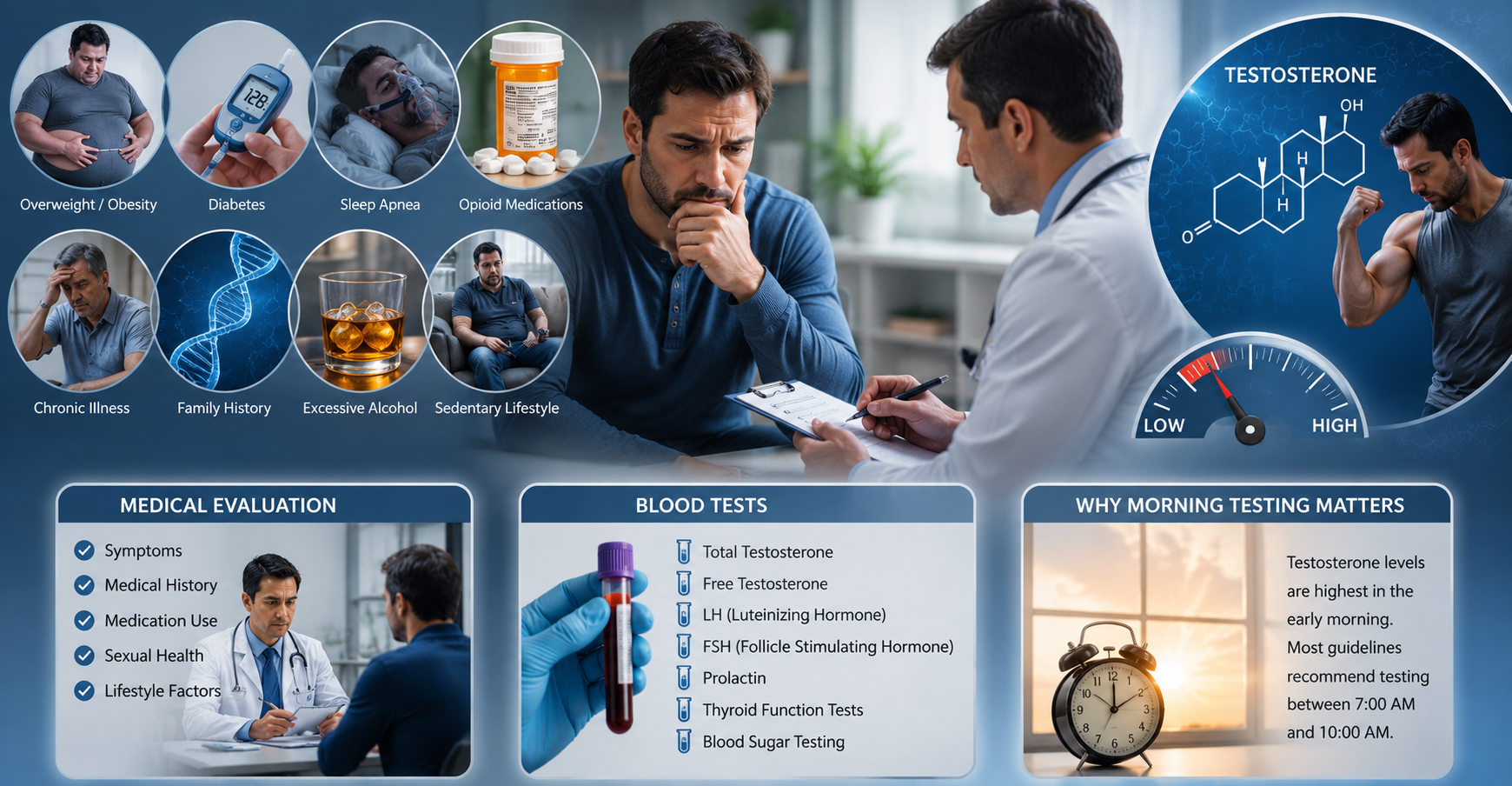
Risk Factors for Testosterone Deficiency
You may have a higher risk if you:
-
Are you overweight or obese
-
Have diabetes
-
Have sleep apnea
-
Use opioid medications
-
Have a chronic illness
-
Have a family history of hormonal disorders
-
Consume excessive alcohol
-
Live a sedentary lifestyle
How Is Low Testosterone Diagnosed?
Diagnosis requires both symptoms and laboratory evidence.
Medical Evaluation
A healthcare provider may review:
-
Symptoms
-
Medical history
-
Medication use
-
Sexual health
-
Lifestyle factors
Blood Tests
Common tests include:
-
Total testosterone
-
Free testosterone
-
LH (Luteinizing Hormone)
-
FSH (Follicle Stimulating Hormone)
-
Prolactin
-
Thyroid function tests
-
Blood sugar testing
Why Morning Testing Matters
Testosterone levels are highest in the early morning. Most guidelines recommend testing between 7:00 AM and 10:00 AM.
Natural Ways to Increase Testosterone
Lifestyle interventions can significantly improve hormone health in some men.
Maintain a Healthy Weight
Weight loss may improve testosterone levels, especially in overweight men.
Strength Training
Resistance exercises are among the most effective natural methods for supporting testosterone production.
Examples:
-
Squats
-
Deadlifts
-
Bench press
-
Pull-ups
Prioritize Sleep
Adults should generally aim for 7–9 hours of quality sleep per night.
Poor sleep is strongly associated with hormonal disruption.
Eat a Balanced Diet
Focus on:
-
Lean proteins
-
Eggs
-
Fish
-
Nuts
-
Vegetables
-
Fruits
-
Whole grains
Important nutrients include:
-
Zinc
-
Magnesium
-
Vitamin D
-
Healthy fats
Manage Stress
Stress reduction strategies include:
-
Meditation
-
Prayer
-
Deep breathing
-
Walking
-
Exercise
-
Social support
Concerned About Hormonal Health?
Persistent symptoms such as fatigue, low libido, or erectile dysfunction deserve professional assessment. Speak with an experienced healthcare provider through Apka Muaalij or call 042-32377001 for guidance on appropriate testing and treatment options.
Read: "Pumpkin Seeds For Men In Urdu: 7 Impressive Benefits & Effects"
Foods That May Support Healthy Testosterone Levels
|
Food |
Potential Benefit |
|
Eggs |
Protein, vitamin D |
|
Fatty fish |
Omega-3 fatty acids |
|
Pumpkin seeds |
Zinc source |
|
Lean beef |
Iron and zinc |
|
Spinach |
Magnesium |
|
Pomegranates |
Antioxidants |
|
Nuts |
Healthy fats |
No food alone can cure testosterone deficiency, but a healthy diet supports overall hormonal function.
Medical Treatment for Low Testosterone
When symptoms are significant and laboratory testing confirms deficiency, treatment may be considered.
Testosterone Replacement Therapy (TRT)
TRT may be prescribed as:
-
Injections
-
Gels
-
Patches
-
Pellets
Potential benefits include:
-
Improved libido
-
Better energy levels
-
Increased muscle mass
-
Enhanced mood
-
Improved bone density
Important Considerations
TRT is not appropriate for everyone.
Potential risks and monitoring requirements should be discussed with a qualified physician.
Regular follow-up testing is essential.
Potential Complications of Untreated Low Testosterone
Without proper management, low testosterone may contribute to:
-
Reduced quality of life
-
Osteoporosis
-
Increased fracture risk
-
Depression
-
Sexual dysfunction
-
Infertility
-
Reduced muscle mass
-
Metabolic health problems
Low Testosterone and Men's Mental Health
Research suggests that testosterone deficiency may contribute to mood disturbances in some men.
Symptoms can include:
-
Low motivation
-
Persistent sadness
-
Reduced confidence
-
Emotional instability
However, depression has multiple causes, and hormone levels are only one possible factor.
Read: "Safed Musli Benefits For Male: Strength, Stamina & Sexual Health"
Low Testosterone in Pakistan: Important Considerations
Several factors may increase risk among Pakistani men:
-
Rising obesity rates
-
Physical inactivity
-
Vitamin D deficiency
-
High prevalence of diabetes
-
Poor sleep habits
-
Chronic stress
Maintaining a healthy diet, regular exercise, and routine medical screening can help identify hormone-related issues early.
When Symptoms Affect Daily Life
If low testosterone symptoms are interfering with your relationships, work performance, fitness goals, or overall well-being, seek personalized medical advice. Early diagnosis can help identify treatable causes. For appointments and consultations, contact Apka Muaalij at 042-32377001.
Conclusion
Low testosterone is a common but often overlooked health issue that can affect men physically, emotionally, and sexually. Symptoms such as fatigue, low libido, muscle loss, mood changes, and reduced vitality should not be ignored, especially when they persist over time.
A proper diagnosis requires both symptom assessment and laboratory testing. Many men can improve testosterone levels through weight management, exercise, better sleep, stress reduction, and treatment of underlying medical conditions. For those with confirmed testosterone deficiency, medical therapies may offer meaningful benefits when prescribed and monitored appropriately.
If you suspect low testosterone, consult a qualified healthcare professional rather than self-diagnosing or relying on unproven supplements.
Frequently Asked Questions (FAQs)
1. What are the first signs of low testosterone in men?
Early signs often include reduced sex drive, fatigue, lower energy levels, mood changes, and difficulty maintaining muscle mass despite regular exercise.
2. Can low testosterone cause erectile dysfunction?
Yes. Testosterone plays a role in sexual function. While erectile dysfunction can have many causes, low testosterone may contribute to sexual performance issues in some men.
3. At what age does testosterone start to decline?
Testosterone levels typically begin to decline gradually after age 30. The rate and impact vary between individuals.
4. Can low testosterone cause weight gain?
Yes. Reduced testosterone may contribute to increased body fat, particularly around the abdomen, and reduced muscle mass.
5. Is low testosterone common?
Yes. Testosterone deficiency becomes more common with aging, obesity, diabetes, and certain chronic medical conditions.
6. Can exercise increase testosterone naturally?
Strength training and regular physical activity may help support healthy testosterone levels, especially in overweight or sedentary individuals.
7. Are testosterone boosters effective?
Many over-the-counter products lack strong scientific evidence. Men with symptoms should seek medical evaluation rather than relying solely on supplements.
8. How is low testosterone diagnosed?
Diagnosis requires symptoms plus laboratory confirmation through blood testing, usually performed in the morning and repeated if necessary.
9. Can low testosterone affect fertility?
Yes. Testosterone imbalance may affect sperm production and male fertility, depending on the underlying cause.
10. Should every man with low testosterone take TRT?
No. Treatment decisions depend on symptoms, blood test results, age, fertility goals, medical history, and physician assessment.
Disclaimer: This article is intended for educational purposes only and should not be considered a substitute for professional medical advice, diagnosis, or treatment. Always consult a qualified healthcare professional regarding any symptoms, medical concerns, or treatment decisions. Never ignore professional medical advice or delay seeking care because of information contained in this article.

Find & Book the best "Urologist" near you
Book Appointment