

How To Get Vaccinated For Coronavirus (COVID-19) In Pakistan | Complete Guide
Vaccination has remained one of the most effective public health tools in human history, and the COVID-19 pandemic reinforced its importance worldwide. In Pakistan, the coronavirus outbreak placed immense pressure on an already stretched healthcare system, making widespread vaccination not just a medical necessity but a national priority.
Rolling out the COVID-19 vaccine across a population of over 240 million people was never going to be simple. From logistical hurdles and vaccine hesitancy to registration challenges and misinformation, Pakistan faced multiple obstacles. Despite this, a centralized system and gradual public acceptance helped streamline the vaccination process across the country.
In this guide, an expert general physician, Dr. Bilal Zafar, explains how to get vaccinated for COVID-19 in Pakistan, who is eligible, what steps to follow, where to go, and what to expect before and after vaccination.
Also learn: "Smog: Meaning In Urdu, Types, Causes & Treatments In Pakistan"
Why COVID-19 Vaccination Matters
COVID-19 vaccines help reduce severe illness, hospitalizations, and death. While vaccination does not eliminate the risk of infection, it significantly lowers complications, especially in older adults and people with chronic conditions such as diabetes, heart disease, asthma, and obesity.
In Pakistan, vaccination also became important for:
-
Travel requirements
-
Workplace and educational access
-
Public health protection
Role of NCOC in COVID-19 Vaccination
The National Command and Operation Center (NCOC) played a central role in Pakistan’s COVID-19 response. Instead of fragmented provincial systems, Pakistan adopted a unified national strategy.
NCOC coordinated:
-
Vaccine procurement and allocation
-
Eligibility phases
-
Registration systems
-
Standard operating procedures (SOPs)
-
Public awareness campaigns
This centralized approach reduced confusion and improved access across provinces, urban centers, and rural districts.
Also read: "25 Best Cancer Hospitals in Pakistan (Government & Private) & How to Choose"
Who Is Eligible for the COVID-19 Vaccination in Pakistan?
Eligibility evolved in phases, starting with healthcare workers and senior citizens. Eventually, vaccination became available to all adults.
Currently, COVID-19 vaccination in Pakistan is available for:
-
Individuals 18 years and above
-
Healthcare workers
-
People with comorbid conditions
-
Pregnant and breastfeeding women (after medical consultation)
Booster doses have also been introduced for eligible individuals based on health status and time since last dose.
How to Get Registered for COVID-19 in Pakistan?
1. Registration
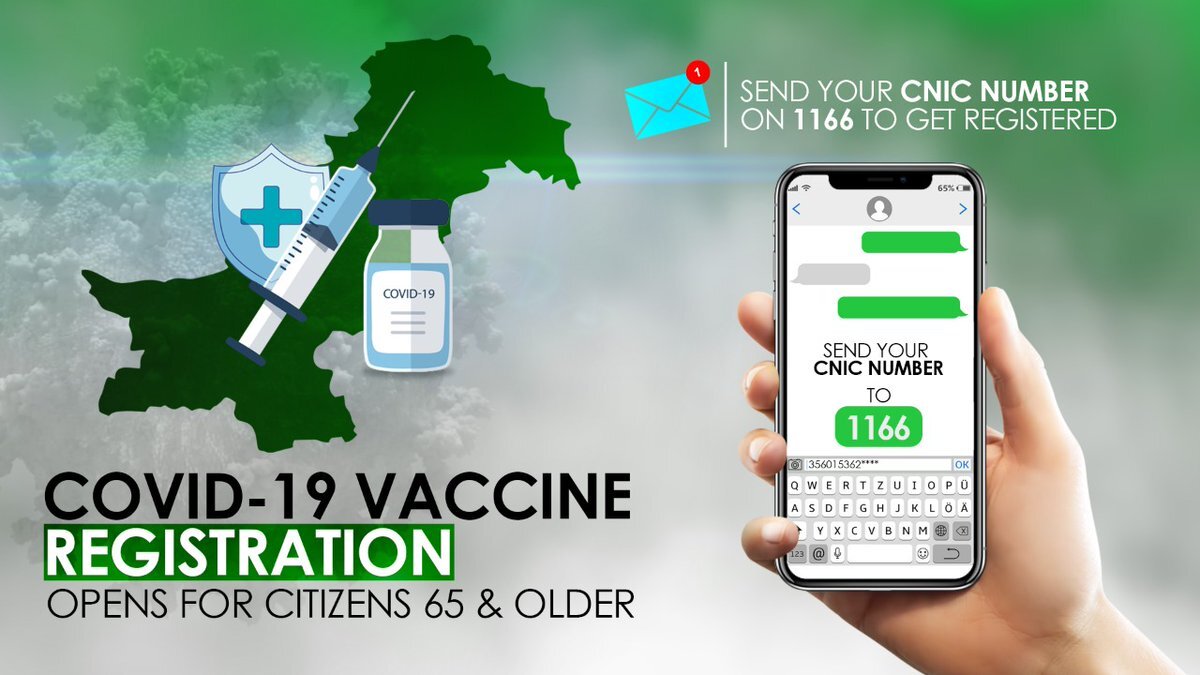
There are two official ways to register:
Via SMS
-
Send your 13-digit CNIC number (without spaces or dashes) to 1166
Via Online Portal
-
Visit nims.nadra.gov.pk
-
Enter CNIC and personal details
2. Confirmation Message
Once registered, you will receive an SMS confirming:
-
Your eligibility
-
A PIN code
-
Assigned Adult Vaccination Center (AVC)
3. Appointment Notification
When vaccines are available at your selected center, you will receive a second SMS with:
-
Appointment date
-
Vaccination center details
Some age groups may also be allowed to walk in for vaccination, depending on policy updates.
4. Visit the Vaccination Center
On the scheduled date:
-
Carry your original CNIC
-
Keep your PIN code message accessible
5. Verification Process
At the center, staff will:
-
Verify CNIC and PIN
-
Confirm eligibility in the NIMS database
6. Vaccination
After verification:
-
The vaccine is administered
-
The injection site is usually the upper arm
7. Post-Vaccination Observation
You will be asked to wait for 15–30 minutes to monitor for immediate reactions.
8. Second Dose (If Required)
For two-dose vaccines:
-
Second appointment SMS is sent automatically
-
The same center and verification process applies
Also, go through: "How To Become A Nutritionist In Pakistan 2026 | Complete Career Guide"
COVID-19 Vaccination Centers in Pakistan
Vaccination centers are available across major cities and districts.
Major Cities Include:
-
Lahore
-
Karachi
-
Islamabad
-
Rawalpindi
-
Faisalabad
-
Multan
-
Peshawar
-
Quetta
Centers include:
-
Government hospitals
-
Teaching hospitals
-
Expo centers
-
Designated vaccination facilities
Updated center lists are available on the NIMS portal.
Also read: "Surah Quraish: 21 Powerful Benefits of Reciting & Reading It Daily"
COVID-19 Vaccines Available in Pakistan
Pakistan has used multiple WHO-approved vaccines, including:
-
Sinopharm
-
Sinovac (CoronaVac)
-
AstraZeneca
-
Sputnik V
-
CanSino Bio
Each vaccine has specific:
-
Age requirements
-
Dose schedules
-
Medical considerations
Your assigned vaccine depends on availability and eligibility at your center.
Common Side Effects of COVID-19 Vaccines
Most side effects are mild and temporary, including:
-
Arm pain or swelling
-
Fatigue
-
Mild fever
-
Headache
-
Muscle aches
These symptoms usually resolve within 1–3 days and indicate an immune response.
Seek medical attention if you experience:
-
Severe allergic reaction
-
Persistent high fever
-
Chest pain or breathing difficulty
You may also read: "20 Spiritual & Life-changing Benefits of Surah Muzammil in the Quran"
Life After COVID-19 Vaccination
Even after vaccination:
-
Continue wearing masks in crowded places
-
Maintain hand hygiene
-
Follow SOPs
Vaccination reduces the severity, not all transmission risk.
Also read: "Top Telehealth Platforms In Pakistan & How They Compare In 2025-26"
Conclusion
Getting vaccinated against COVID-19 in Pakistan is a structured and accessible process designed to protect individuals and communities. While challenges existed, the centralized approach helped millions receive protection against severe illness. Staying informed, registered, and cautious remains essential as the virus continues to evolve.
If you have underlying health conditions, pregnancy concerns, or have experienced side effects after vaccination, professional medical guidance is recommended.
You can consult a qualified general physician in Pakistan through Apka Muaalij, a leading digital healthcare platform. Call 042-32377001 to connect with verified doctors and get trusted medical advice from home via online video consultation anytime, anywhere.
Frequently Asked Questions (FAQs)
Is COVID-19 vaccination mandatory in Pakistan?
No, but it is strongly recommended for public safety.
Can I get vaccinated if I already had COVID-19?
Yes, after recovery and completion of isolation.
Is vaccination safe during pregnancy or breastfeeding?
Generally considered safe, but consult your doctor.
How many doses are required?
Depends on vaccine type (one or two doses).
What if I miss my second dose?
Get it as soon as possible.
Can I choose my vaccine brand?
Usually no, depends on availability.
Is the vaccine free in Pakistan?
Yes, at government vaccination centers.
Do I need tests before vaccination?
No routine testing required.
Can children get vaccinated?
Eligibility depends on current government policy.
How long does immunity last?
Protection wanes over time; boosters may be needed.
Can vaccinated people still spread COVID-19?
Risk is reduced but not eliminated.
Where can I report side effects?
Via the NIMS portal or healthcare provider.
Disclaimer: This article is for informational and awareness purposes only and does not replace professional medical advice. COVID-19 vaccination guidelines may change over time. Always consult a licensed healthcare provider or official government sources before making medical decisions.

Find & Book the best "General Physician" near you
Book Appointment
Dr. Muhammad Usama, RPh
Dr. Dr. Muhammad Usama, RPh is a highly experienced specialist based in Lahore, Pakistan with over several years of clinical expertise. Specializing in evidence-based and patient-centered care, they provides advanced treatment tailored to individual needs. Currently available on Apka Muaalij, appointments can be booked at 042-32377001.