Caffeine Side Effects: Symptoms, Risks & Safe Consumption

Caffeine is the most widely consumed psychoactive substance in the world. Found naturally in coffee, tea, cacao, and many energy drinks, it is valued for its ability to boost alertness, improve focus, and reduce fatigue.
Yet caffeine is still a stimulant drug. While moderate intake is considered safe for most adults, excessive or poorly timed consumption can trigger a range of physical and psychological side effects. Many people experience symptoms such as anxiety, insomnia, digestive issues, or heart palpitations without realizing caffeine may be the cause.
Understanding how caffeine affects the body is essential if you rely on it daily. This guide explains the most common caffeine side effects, why they occur, who is most sensitive, and how to consume caffeine safely without harming your health.
Key Takeaways
-
Caffeine is a stimulant that blocks adenosine and increases alertness in the brain.
-
Most adults can safely consume up to 400 mg per day, though tolerance varies widely.
-
Common caffeine side effects include anxiety, insomnia, digestive problems, headaches, and heart palpitations.
-
Excessive intake may lead to dependence and withdrawal symptoms.
-
Pregnant women, children, and people with anxiety or heart conditions should limit caffeine more carefully.
-
Managing caffeine timing and total intake helps prevent unwanted symptoms.
What Is Caffeine?

Caffeine is a natural stimulant that affects the central nervous system. It occurs naturally in plants such as:
-
Coffee beans
-
Tea leaves
-
Cacao beans (chocolate)
-
Guarana berries
-
Kola nuts
-
Yerba mate
It is also added to many products, including:
-
Energy drinks
-
Soft drinks
-
Pre-workout supplements
-
Weight-loss pills
-
Certain pain medications
How Caffeine Works in the Body
Caffeine primarily works by blocking adenosine, a brain chemical responsible for promoting sleep and relaxation. When adenosine receptors are blocked:
-
Brain activity increases
-
Dopamine and norepinephrine levels rise
-
Alertness and energy improve
According to the U.S. Food and Drug Administration (FDA), moderate caffeine intake of up to 400 mg per day is generally safe for healthy adults. However, sensitivity varies widely based on genetics, metabolism, medications, and overall health.
How Much Caffeine Is Too Much?
For most adults, 400 mg per day is considered the upper safe limit. Consuming significantly more than this increases the risk of side effects.
Common Caffeine Amounts in Beverages
|
Beverage |
Approximate Caffeine Content |
|
Brewed coffee (8 oz) |
95–200 mg |
|
Espresso (1 shot) |
63 mg |
|
Black tea (8 oz) |
40–70 mg |
|
Green tea (8 oz) |
30–50 mg |
|
Energy drink (8 oz) |
40–250 mg |
|
Cola soda (12 oz) |
30–40 mg |
|
Dark chocolate (1 oz) |
20–30 mg |
Even moderate intake can trigger side effects in people who are sensitive to caffeine or consume it late in the day.
12 Most Common Caffeine Side Effects
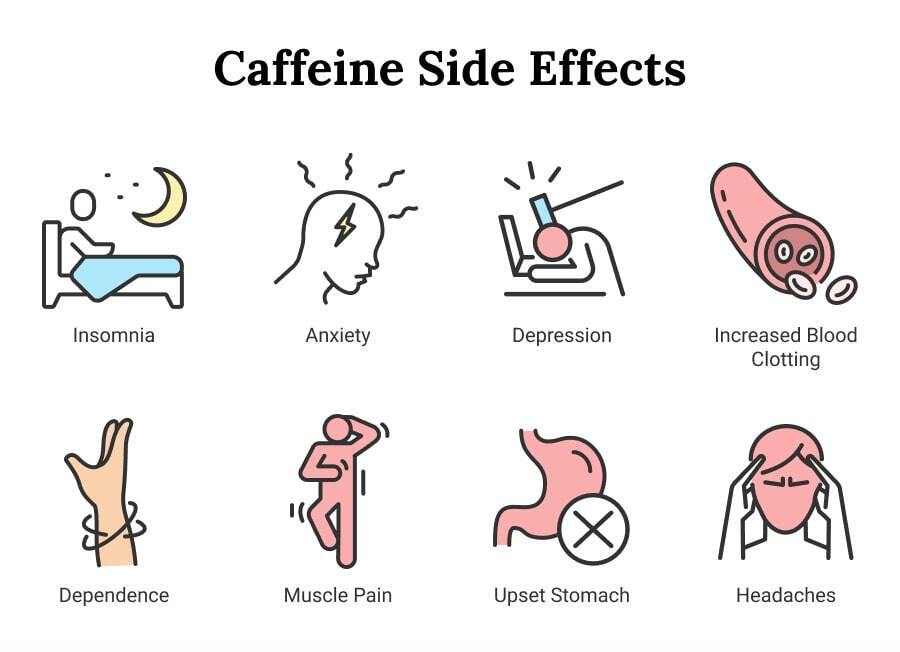
Caffeine side effects usually occur when intake exceeds personal tolerance or when consumption is too frequent. Below are the most common symptoms supported by clinical research.
1. Anxiety and Nervousness
One of the most recognized caffeine side effects is increased anxiety.
High caffeine doses stimulate adrenaline release, activating the body’s “fight-or-flight” response. This can produce:
-
Restlessness
-
Racing thoughts
-
Jitters
-
Feeling on edge
The Diagnostic and Statistical Manual of Mental Disorders (DSM-5) even recognizes caffeine-induced anxiety disorder as a possible condition.
Research suggests doses above 400 mg are associated with significantly higher anxiety levels in many individuals.
2. Insomnia and Sleep Disruption
Caffeine’s ability to promote wakefulness can easily interfere with sleep.
It can:
-
Increase the time required to fall asleep
-
Reduce total sleep duration
-
Decreased sleep quality
Caffeine can remain in the body for 5–7 hours, and sometimes longer, depending on metabolism. Consuming caffeine late in the afternoon or evening can therefore disrupt nighttime sleep cycles.
Sleep experts often recommend avoiding caffeine 6–8 hours before bedtime.
3. Digestive Problems
Caffeine stimulates the digestive system and increases stomach acid production.
Common gastrointestinal symptoms include:
-
Upset stomach
-
Acid reflux
-
Heartburn
-
Diarrhea
-
Loose stools
Coffee can also stimulate the release of gastrin, a hormone that increases activity in the colon. This explains why many people experience bowel movements shortly after drinking coffee.
4. Rapid Heart Rate and Heart Palpitations
Caffeine stimulates the cardiovascular system.
In sensitive individuals or at high doses, this can cause:
-
Increased heart rate
-
Irregular heartbeat
-
Heart palpitations
Some studies have linked high caffeine intake with atrial fibrillation episodes in susceptible individuals, particularly after energy drink consumption.
5. High Blood Pressure
Caffeine can temporarily raise blood pressure by stimulating the nervous system.
For most healthy individuals, this effect is short-lived. However, people with hypertension may experience stronger responses.
Elevated blood pressure becomes a concern because long-term hypertension increases the risk for:
-
Heart disease
-
Stroke
-
Kidney damage
6. Frequent Urination and Dehydration
Caffeine acts as a mild diuretic, increasing urine production.
Symptoms may include:
-
Frequent urination
-
Urgent bladder activity
-
Mild dehydration
People who consume large quantities of caffeine may notice they need to urinate more often than usual.
7. Headaches
Caffeine can both relieve and cause headaches.
Low doses are sometimes used in headache medications because caffeine improves the absorption of pain relievers. However, excessive intake can trigger headaches due to:
-
Blood vessel constriction
-
Withdrawal symptoms
-
Rebound headaches after caffeine wears off
8. Muscle Breakdown (Rare but Serious)
Extremely high caffeine consumption has been linked to rhabdomyolysis, a condition where muscle tissue breaks down and releases harmful proteins into the bloodstream.
Symptoms include:
-
Severe muscle pain
-
Weakness
-
Dark urine
Although rare, cases have been reported in people consuming very high doses of caffeine supplements or energy drinks.
9. Caffeine Dependence
Regular caffeine consumption can lead to tolerance and dependence.
Over time, the body adapts and requires larger amounts to produce the same effects. This can create a cycle where individuals feel they cannot function without caffeine.
Dependence does not equal addiction in the clinical sense, but it can still affect daily functioning.
10. Caffeine Withdrawal Symptoms
When regular caffeine users suddenly stop intake, withdrawal symptoms may appear within 12–24 hours.
Common symptoms include:
-
Fatigue
-
Headaches
-
Irritability
-
Difficulty concentrating
-
Mood changes
Withdrawal symptoms usually last 2–7 days before resolving.
11. Fatigue and Energy Crashes
Ironically, excessive caffeine can cause fatigue.
After caffeine levels drop, people may experience a rebound energy crash. This can lead to a cycle of repeated caffeine consumption throughout the day.
Over time, this pattern may worsen sleep quality and increase daytime tiredness.
12. Mood Changes and Irritability
High caffeine intake can affect neurotransmitters linked to mood regulation.
Some individuals experience:
-
Irritability
-
Agitation
-
Mood swings
-
Increased stress sensitivity
These effects are more likely in people already prone to anxiety disorders.
Short-Term vs Long-Term Caffeine Side Effects
|
Type |
Examples |
|
Short-Term Effects |
Jitters, anxiety, insomnia, increased heart rate |
|
Digestive Effects |
Acid reflux, diarrhea, upset stomach |
|
Neurological Effects |
Headaches, irritability, restlessness |
|
Long-Term Effects |
Dependence, sleep disruption, tolerance |
|
Rare Severe Effects |
Arrhythmia, seizures, rhabdomyolysis |
Who Is Most Sensitive to Caffeine?
Certain groups are more vulnerable to caffeine side effects.
1. Pregnant Women
High caffeine intake during pregnancy has been associated with:
-
Increased miscarriage risk
-
Low birth weight
Many health organizations recommend limiting intake to 200 mg per day during pregnancy.
2. Children and Teenagers
Young people metabolize caffeine differently and may experience stronger effects.
Possible risks include:
-
Sleep disturbances
-
Anxiety
-
Rapid heart rate
-
Behavioral changes
The American Academy of Pediatrics discourages energy drink consumption among children.
3. People With Anxiety Disorders
Because caffeine stimulates the nervous system, it can worsen:
-
Panic disorder
-
Generalized anxiety
-
Stress sensitivity
Reducing caffeine intake often helps improve anxiety symptoms.
4. People With Heart Conditions
Individuals with certain cardiovascular conditions should be cautious because caffeine may trigger:
-
Heart palpitations
-
Arrhythmias
-
Elevated blood pressure
Hidden Sources of Caffeine

Many people underestimate their caffeine intake because it comes from multiple sources.
Hidden sources include:
-
Chocolate and cocoa products
-
Energy bars and protein bars
-
Certain medications
-
Pre-workout supplements
-
Weight-loss pills
-
Some flavored waters and sodas
Even decaffeinated coffee typically contains 2–15 mg of caffeine per cup.
How to Reduce Caffeine Side Effects
If caffeine causes unpleasant symptoms, reducing intake gradually is usually the best approach.
Practical strategies
-
Track daily caffeine intake
-
Reduce consumption slowly to avoid withdrawal
-
Replace some drinks with decaffeinated options
-
Avoid caffeine after early afternoon
-
Stay hydrated with water
-
Improve sleep habits to reduce reliance on stimulants
Gradual reduction helps the nervous system adapt without severe withdrawal symptoms.
Need Healthcare Assistance?
Our expert healthcare professionals, including the best nutritionists, sexologists, and general physicians near you in Pakistan, are here to support you. If you have specific health concerns or queries, Apka Muaalij encourages you to consult your qualified specialists. Book an online video consultation or call 042-32377001.
Frequently Asked Questions (FAQs)
What are the most common caffeine side effects?
Common caffeine side effects include anxiety, insomnia, jitteriness, rapid heartbeat, headaches, digestive discomfort, and frequent urination. These symptoms typically occur when caffeine intake exceeds personal tolerance or when consumed late in the day.
How much caffeine is safe per day?
For most healthy adults, up to 400 mg per day is considered safe according to the U.S. Food and Drug Administration. This equals roughly four cups of brewed coffee. Sensitivity varies, so some people experience side effects at much lower amounts.
Can caffeine cause anxiety?
Yes. Caffeine stimulates the nervous system and increases adrenaline levels, which can trigger anxiety, nervousness, or panic attacks in sensitive individuals. People with anxiety disorders are often more affected by caffeine.
Does caffeine affect sleep?
Caffeine can significantly disrupt sleep. It blocks adenosine, the chemical responsible for sleepiness, making it harder to fall asleep and reducing sleep quality. Experts often recommend avoiding caffeine at least six hours before bedtime.
Can caffeine cause heart palpitations?
High caffeine intake may cause heart palpitations or a rapid heartbeat in sensitive individuals. These symptoms usually occur after consuming large doses of caffeine or energy drinks.
Why does caffeine cause stomach problems?
Caffeine increases stomach acid production and stimulates intestinal movement. This can lead to acid reflux, stomach irritation, or diarrhea in some people.
What happens if you suddenly stop caffeine?
Suddenly stopping caffeine can cause withdrawal symptoms such as headaches, fatigue, irritability, and difficulty concentrating. These symptoms typically begin within 24 hours and may last up to one week.
Can caffeine cause dehydration?
Caffeine has mild diuretic effects that increase urine production. However, moderate caffeine intake does not usually cause severe dehydration if adequate fluids are consumed throughout the day.
Is caffeine addictive?
Caffeine can cause physical dependence, meaning regular users may experience withdrawal symptoms if they stop suddenly. However, it does not produce the same type of addiction associated with stronger stimulant drugs.
How long do caffeine effects last?
Caffeine effects typically begin within 15–45 minutes and may last 3–7 hours, depending on metabolism, body weight, and tolerance levels.
Disclaimer: This article is for informational and educational purposes only and does not replace professional medical advice. Individual responses to caffeine vary widely. If you experience severe symptoms such as chest pain, persistent heart palpitations, or anxiety, consult a qualified healthcare professional for personalized guidance.