

11 Science-Backed Black Pepper Benefits, Nutrition & How To Use It

Black pepper is one of the most familiar ingredients in kitchens around the world. A pinch of it can transform a bland dish into something flavorful and aromatic. But beyond its culinary role, black pepper offers a surprising range of health benefits supported by both traditional medicine and modern research.
Derived from the dried berries of the plant Piper nigrum, black pepper contains several bioactive compounds, the most important being Piperine. This compound is responsible for the spice’s pungent taste and many of its physiological effects.
For centuries, black pepper has been valued in traditional healing systems such as Ayurveda and Traditional Chinese Medicine. Today, scientific studies suggest that this everyday spice may support digestion, improve nutrient absorption, reduce inflammation, and contribute to metabolic and cognitive health.
This comprehensive guide explores the science-backed benefits of black pepper, its nutritional profile, how it works in the body, potential side effects, and practical ways to include it in your diet.
Key Takeaways
-
Black pepper contains piperine, a compound responsible for many of its health benefits.
-
It provides antioxidant and anti-inflammatory effects that may protect cells from damage.
-
The spice can enhance nutrient absorption, especially when combined with turmeric.
-
Research suggests potential benefits for digestion, metabolism, heart health, and brain function.
-
Freshly ground pepper offers greater potency and flavor than pre-ground varieties.
-
Consuming black pepper in normal culinary amounts is generally safe for most people.
What Is Black Pepper?
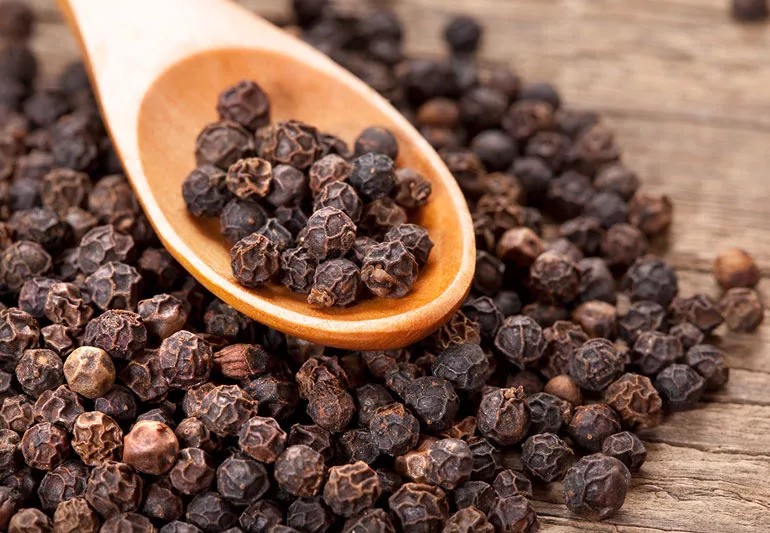
Black pepper is a spice made from the dried unripe fruit (peppercorn) of the vine Piper nigrum, native to the tropical regions of South Asia.
Peppercorns grow in clusters on the vine. When harvested and dried, they turn dark and wrinkled, forming the familiar black peppercorn used worldwide.
Key Characteristics
-
Flavor: Sharp, warm, slightly spicy
-
Active compound: Piperine
-
Forms available:
-
Whole peppercorns
-
Ground black pepper
-
Pepper extracts or supplements
-
Because of its widespread use and medicinal reputation, black pepper is often called the “King of Spices.”
Nutritional Profile of Black Pepper
Although typically consumed in small amounts, black pepper still provides valuable nutrients and plant compounds.
Nutrients in 1 Teaspoon of Black Pepper
|
Nutrient |
Amount |
Health Role |
|
Calories |
~6 |
Minimal caloric impact |
|
Fiber |
~1 g |
Supports digestion |
|
Manganese |
~13% DV |
Bone health and metabolism |
|
Vitamin K |
~3% DV |
Blood clotting and bone function |
|
Iron |
Trace |
Oxygen transport |
|
Potassium |
Trace |
Blood pressure regulation |
|
Antioxidants |
High |
Protect cells from oxidative stress |
Beyond vitamins and minerals, black pepper contains:
-
Alkaloids
-
Flavonoids
-
Essential oils
-
Phenolic compounds
Most of its health effects are attributed to piperine, a powerful bioactive compound.
Key Active Compound: Piperine
Piperine is the primary alkaloid responsible for black pepper’s pungency and health effects.
How Piperine Works
Research indicates that piperine may:
-
Act as an antioxidant
-
Reduce inflammation
-
Improve digestive enzyme activity
-
Increase nutrient absorption
-
Influence metabolism
A study published in the Journal of Food Science and Nutrition notes that piperine can significantly enhance the bioavailability of certain nutrients and plant compounds.
11 Science-Backed Health Benefits of Black Pepper
1. Powerful Antioxidant Protection
Black pepper contains potent antioxidants that help neutralize free radicals, unstable molecules that damage cells.
Excess free radical activity is linked to conditions such as:
-
Heart disease
-
Premature aging
-
Neurodegenerative disorders
-
Chronic inflammation
Laboratory studies show that piperine can reduce oxidative stress, which may protect cells and tissues from long-term damage.
2. Natural Anti-Inflammatory Effects
Chronic inflammation is a major driver behind many diseases, including arthritis, diabetes, and cardiovascular disease.
Research suggests that piperine may reduce inflammatory markers in the body.
Animal studies have shown that piperine may:
-
Reduce joint swelling
-
Lower inflammatory cytokines
-
Improve symptoms of inflammatory conditions
Although human studies are still limited, the anti-inflammatory potential of black pepper is promising.
3. Improves Digestion
Black pepper stimulates the production of hydrochloric acid (HCl) in the stomach.
This acid is essential for:
-
Breaking down food
-
Absorbing nutrients
-
Preventing digestive discomfort
As a result, black pepper may help relieve:
-
Bloating
-
Indigestion
-
Gas
-
Constipation
Traditional digestive remedies frequently combine black pepper with ginger and cumin for this reason.
4. Enhances Nutrient Absorption
One of the most remarkable benefits of black pepper is its ability to improve nutrient absorption.
Studies show that piperine can increase the bioavailability of several compounds, including:
-
Selenium
-
Vitamin B12
-
Beta-carotene
-
Curcumin from turmeric
A widely cited study published in Planta Medica found that piperine increased curcumin absorption by up to 2,000 percent.
This explains why many supplements combine turmeric with black pepper extract.
5. Supports Brain Health
Emerging research suggests that black pepper may help support cognitive function.
Animal studies indicate that piperine may:
-
Improve memory performance
-
Reduce oxidative damage in brain cells
-
Protect against neurodegenerative conditions
These effects may have implications for disorders such as:
-
Alzheimer's disease
-
Parkinson's disease
More human research is needed, but the early findings are encouraging.
6. May Help Control Blood Sugar
Preliminary studies suggest black pepper may influence glucose metabolism.
Research in animals indicates that piperine may:
-
Improve insulin sensitivity
-
Reduce spikes in blood sugar after meals
Improved insulin response may help reduce the risk of metabolic disorders such as Type 2 diabetes.
However, clinical studies in humans are still limited.
7. Supports Heart Health
Cardiovascular disease remains one of the leading global health challenges.
Black pepper may support heart health through several mechanisms:
-
Antioxidant protection
-
Reduced inflammation
-
Improved cholesterol metabolism
Animal studies have found that black pepper extract may help lower LDL (“bad”) cholesterol levels while improving lipid profiles.
These effects could potentially reduce risk factors linked to Cardiovascular disease.
8. May Aid Weight Management
Some research suggests that piperine may influence metabolism and fat formation.
Potential mechanisms include:
-
Increasing thermogenesis (heat production)
-
Reducing fat cell formation
-
Improving metabolic efficiency
While black pepper alone will not cause weight loss, it may complement a balanced diet and healthy lifestyle.
9. Promotes Gut Health
Your digestive tract contains trillions of bacteria collectively known as the gut microbiome.
Preliminary studies suggest that black pepper may help:
-
Promote beneficial gut bacteria
-
Improve digestion
-
Support nutrient metabolism
A healthy microbiome plays a role in immunity, mental health, and metabolic balance.
10. May Have Anti-Cancer Potential
Laboratory studies have explored the potential anti-cancer properties of piperine.
Research suggests that piperine may:
-
Slow cancer cell growth
-
Induce programmed cell death
-
Enhance the effectiveness of certain cancer treatments
Some studies show activity against breast, colon, and prostate cancer cells. However, these findings come primarily from laboratory research, and clinical evidence in humans is still lacking.
11. May Reduce Appetite
Some small human studies suggest black pepper may influence appetite regulation.
In one experiment, participants who consumed a beverage containing black pepper reported reduced hunger levels compared with those who drank flavored water.
More research is needed, but these findings suggest a potential role in dietary management.
Black Pepper vs White Pepper vs Green Pepper
|
Type |
Harvest Stage |
Flavor |
Typical Uses |
|
Black Pepper |
Unripe berries, dried |
Strong, spicy |
Everyday seasoning |
|
White Pepper |
Ripe berries, skin removed |
Milder, earthy |
Light sauces, soups |
|
Green Pepper |
Unripe berries preserved |
Fresh, mild |
Gourmet cooking |
All varieties come from the same plant: Piper nigrum.
How to Use Black Pepper for Maximum Health Benefits
To maximize the benefits of black pepper, preparation and timing matter.
Best Practices
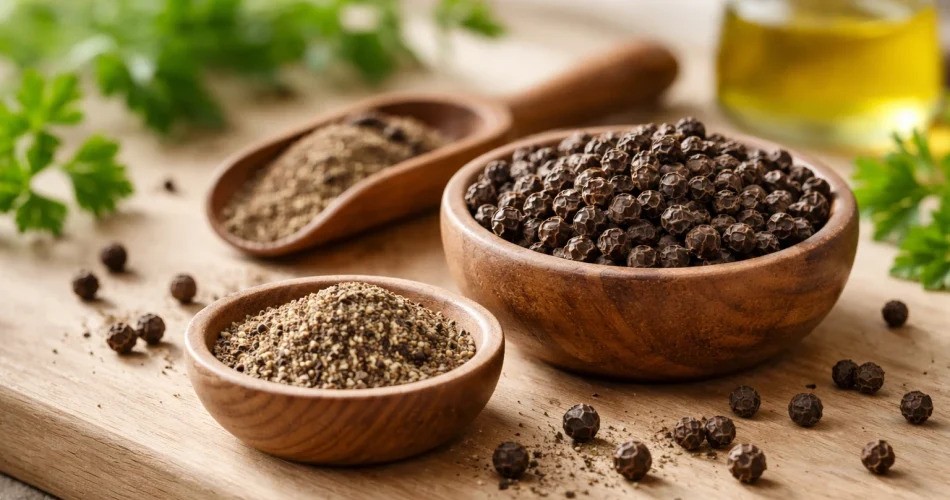
1. Use freshly ground pepper
Grinding peppercorns just before use preserves essential oils and piperine.
2. Combine with turmeric
The combination improves absorption of curcumin.
3. Add near the end of cooking
High heat can degrade volatile oils.
4. Pair with healthy fats
Fat can enhance the absorption of fat-soluble nutrients.
Simple Ways to Include It
-
Sprinkle on roasted vegetables
-
Add to soups and broths
-
Season eggs or omelets
-
Use in marinades for meat or tofu
-
Mix into salad dressings
How Much Black Pepper Is Safe?
There is no strict recommended daily intake for black pepper.
Most experts suggest consuming it in normal culinary amounts.
Typical serving:
-
1/8 to 1/4 teaspoon per meal
Higher doses through supplements should only be used under medical guidance.
Possible Side Effects of Black Pepper
Black pepper is generally safe when consumed in food. However, excessive intake may cause side effects.
Potential Issues
-
Stomach irritation
-
Acid reflux
-
Burning sensation in the throat
-
Medication interactions
Because piperine affects absorption, it may influence how certain drugs are metabolized.
People taking prescription medications should consult a healthcare professional before using high-dose supplements.
Need Healthcare Assistance?
Our expert healthcare professionals, including the best nutritionists and general physicians near you in Pakistan, are here to support you. If you have specific health concerns or queries, Apka Muaalij encourages you to consult your qualified specialists. Book an online video consultation or call 042-32377001.
Frequently Asked Questions (FAQs)
Is black pepper good for digestion?
Yes. Black pepper stimulates stomach acid production, which helps break down food and improve digestion. It may reduce bloating, gas, and indigestion while improving nutrient absorption.
Can black pepper help with weight loss?
Black pepper may support weight management by increasing metabolism and reducing fat accumulation. However, it should be considered a supportive dietary ingredient rather than a standalone weight loss solution.
Does black pepper improve nutrient absorption?
Yes. The compound piperine enhances the bioavailability of several nutrients and plant compounds, including curcumin, selenium, and beta-carotene.
Is it better to use whole peppercorns or ground pepper?
Whole peppercorns that are freshly ground retain more essential oils and piperine. Pre-ground pepper gradually loses potency due to oxidation.
Can black pepper improve brain health?
Early studies suggest that piperine may support cognitive function and protect brain cells from oxidative stress. Researchers are exploring its potential role in neurodegenerative diseases.
Does black pepper affect blood sugar levels?
Preliminary research indicates that black pepper may improve insulin sensitivity and help regulate blood sugar metabolism. However, human clinical studies are still limited.
Is black pepper safe to eat every day?
Yes. When used in typical cooking amounts, black pepper is considered safe for daily consumption by most healthy adults.
Can black pepper interact with medications?
Yes. Piperine can affect how the body absorbs certain medications by altering metabolic enzymes. People taking prescription drugs should consult a healthcare professional before using high-dose pepper supplements.
Does black pepper have anti-cancer properties?
Laboratory studies suggest piperine may inhibit cancer cell growth and improve treatment response. However, more human clinical research is required before drawing firm conclusions.
How much black pepper should you consume daily?
Most people benefit from about 1/8 to 1/4 teaspoon per meal, which provides flavor and potential health benefits without causing digestive irritation.
Disclaimer: This article is for informational and educational purposes only. It does not replace professional medical advice, diagnosis, or treatment. Always consult a qualified healthcare provider before making significant dietary changes or using supplements, particularly if you have underlying health conditions or take prescription medications.

Find & Book the best "General Physician" near you
Book Appointment